
Chop These Now! ✂️ June Pruning Guide!
Want to get the MOST from your herbs, perennials and shrubs? In this video, Ike shows you how to prune your plants to perfection for better tasting leaves, longer blooms and control over shape and size. Learn how to deadhead your Basil and Coreopsis, Chelsea Chop unruly perennials, and trim up your Boxwood!
Key Points:
A simple pair of pruning shears is your all-in-one tool for maintaining a beautiful, bountiful garden
When the Summer heat hits, many herbs begin bolting, or going to flower, which degrades flavor and texture.
If you let Cilantro flower and go to seed, you can collect Coriander seeds. Cilantro and Coriander are the same plant!
Trimming flower buds on herbs like Basil, Oregano, Thyme, Mint and Sage will keep their foliage flavorful longer into the Summer
Sanitize your pruning shears between plants!
Always trim just above a "node"
Perennials like Meadow Sage, Coreopsis, Agastache, Hardy Geranium and Dianthus benefit greatly from deadheading
Train taller perennials like Ironweed, Joe Pye Weed, Goldenrod, Garden Phlox, Stonecrop and Montauk Daisies using the "Chelsea Chop" method
Early Summer is the perfect time to prune broadleaf evergreen shrubs like Boxwood, Euonymus, Yew and Skip Laurels

Welcome back to Bountiful Gardens! What if we told you that with just one tool, you can keep your herbs tasting delicious, your flowers re-blooming, and your shrubs shapely for the new season? You probably guessed it, but we’re talking about pruning shears! Let's get to June pruning!
Herb Pruning

Because the weather really starts heating up in June, your herbs are going to start going into overdrive and start a process known as bolting. This is when the plant begins to focus on flowering and seed production rather than vegetative growth. It’s great for the plant, but not so great for flavor!

When an herb begins the process of bolting, it takes its energy away from its leaves and forces it towards the flowers and seeds. This makes the leaves a little bitter and the plant, overall, more woody, so you want to trim the flowers off as soon as you start to see the buds.

Other herbs, like Cilantro, Dill and Parsley change their structure dramatically once they’ve bolted—the leaves get thinner, more bitter, and the plant becomes stalky and tall.

For Cilantro, the plant focuses all its energy on its flowers, then produces Coriander seeds! In fact, many people actually plant Cilantro in the back of their garden specifically to produce Coriander seeds!

We’ve set aside a few Basil plants to allow them to start flowering so we can show you how to prune them.

Before we do any pruning, we’re going to sanitize our clippers. We use 70% isopropyl alcohol, which keeps our clippers clean and our plants healthy.

To trim bolting Basil, you’re going to want to find a new flower bud, then head down the stem to the first grouping of leaves that looks really nice and lush—this is called the node.

You’re going to want to trim right above the node with a 45 degree angle. One clean snip, and the plant is ready to produce more flavorful leaves.

For the best tasting herbs, this is a process you’ll want to repeat for Oregano, Thyme, Mint and Sage.
Perennial Pruning

Now that we’re done using our clippers in the herb section to prevent flowers, it’s time to use them to get even more flowers where you do want them: your perennial garden!

The first trimming method we’ll go over is deadheading, where you trim off spent blooms before they go to seed to promote new flowers. We’ve set aside a collection of perennials that could use a little deadheading—things like Meadow Sage, Coreopsis, Agastache, Hardy Geranium and Dianthus.
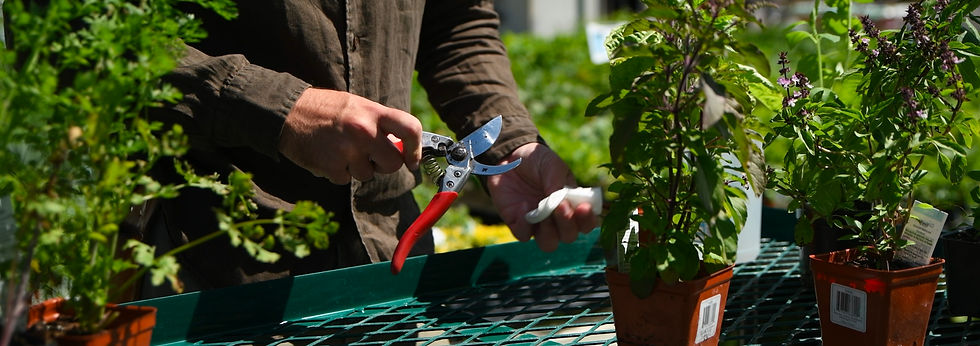
Just like before, make sure to sanitize your clippers between plants!

On plants like Dianthus, find the spent flowers, follow them down the stem to the first node with healthy new growth, and perform your cut. This will keep the plant from trying to develop seeds on spent blooms, letting it keep its focus on producing more flowers.

Same goes for Meadow Sage! When its flower stalks are spent, follow them down to the node and snip slightly above to keep your plant in full bloom all season.

Coreopsis is much the same! Just follow spent blooms down the stalk to a healthy node and snip just above. While flowering perennials can look very different, the deadheading process is very similar across the board. Simply snip above the node!
Chelsea Chop

Sometimes perennials can benefit from a much more dramatic cut, otherwise known as the Chelsea Chop. This is when you cut your perennial at a third to even halfway down the plant, and it works especially well for taller perennials like Joe Pye Weed and Asters, keeping them from getting too floppy as the season goes on while controlling their growth and promoting more branching, leading to more flowers!

Just like with deadheading, you’re going to be trimming right above a node. Find a healthy node with new growth on either side about a third of the way down the stem, and perform your cut just above the node.
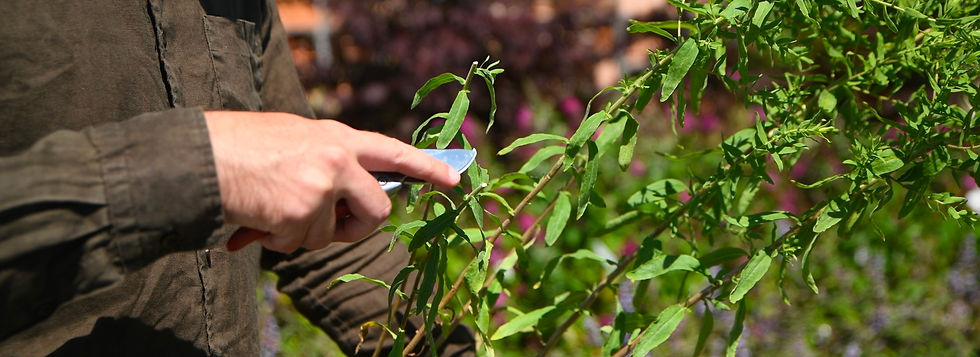
To keep a more natural look, make sure you stagger your cuts by an inch or two in height. If a plant has a few leggy stems, you can trim them down by half to help it look more cohesive.

The Chelsea Chop is a great method of controlling the shape and bloom time of all sorts of perennials, especially taller varieties like Ironweed, Goldenrod, Garden Phlox, Stonecrop and Montauk Daisies.
Broadleaf Evergreen Pruning

Perennials aren’t the only things you should be getting in shape right now. Summer is the perfect time to get your broadleaf evergreen shrubs in shape. By pruning them now, their new growth will be hardened off by Fall and be protected through Winter.
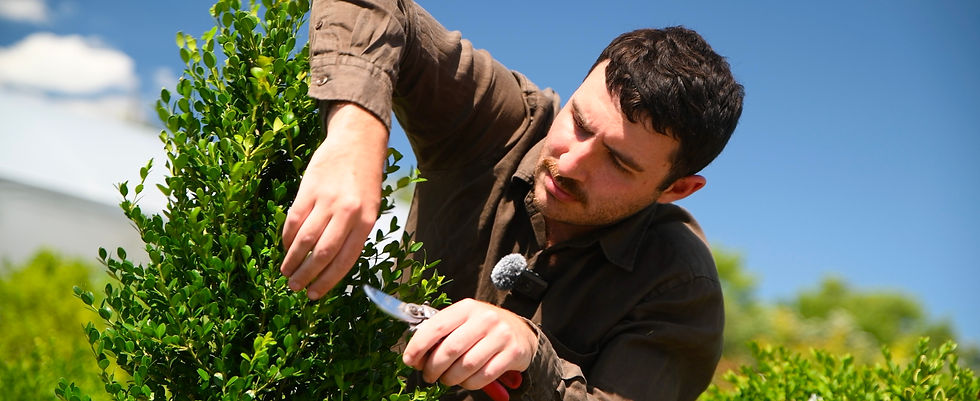
To maintain clean shapes, like on the Faulkner Boxwood Ike chose, you can imagine an invisible line from the bottom of the plant up to the apex, then follow it with your clippers. Then simply move around the plant and repeat the process.

Brush your hand along the shrub to shake loose any odds and ends you may still need to trim.

And there you have it! Now the plant can flush out beautiful new growth through the rest of the growing season, and have a beautiful shape for the Winter.

This doesn’t only work for Boxwoods—all sorts of evergreens like Euonymus, Yew and Skip Laurels can benefit from a quick shaping in Summer.

So what are you waiting for? Sharpen your shears, get outside, and improve every corner of your garden with one quick clip!


Comments