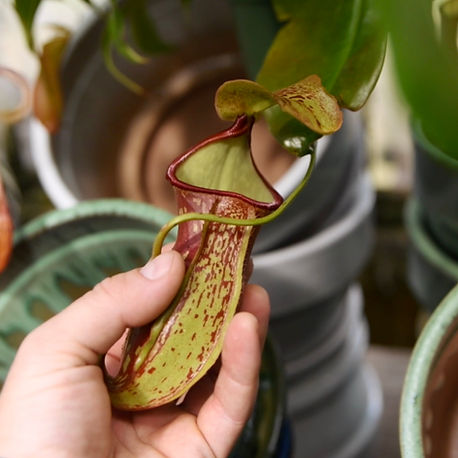
Indoor Carnivorous Plants
Various
The Bug-Eaters: Carnivorous Species
These plants are functional, fascinating, and excellent for natural pest control (especially for those pesky fungus gnats!). From the snap-traps of the Carolinas to the sticky dew of the tropics, they bring a prehistoric vibe to your windowsill.
Suggested Placement in the Home
The Sunny Windowsill: Most carnivorous plants (especially Flytraps and Sarracenia) need intense light. A South-facing window is best.
The Terrarium: Tropical Pitcher Plants (Nepenthes) and Sundews love the high humidity of a glass enclosure.
The Kitchen: Placing a Sundew near your fruit bowl or indoor compost bin is a great way to catch stray gnats and fruit flies.
Care & Maintenance
The "Pure Water" Rule: This is the most important step. Their roots are extremely sensitive to minerals. Use distilled water, rainwater, or reverse osmosis water only. Tap water will eventually "burn" the roots and kill the plant.
The Feet-Wet Method: For most (except Nepenthes), keep the pot sitting in a shallow tray of pure water at all times. They never want to "dry out."
Don't Tease the Traps: Closing a Venus Flytrap without a meal inside costs the plant a massive amount of energy. Only trigger them if you are actually feeding them!
The Essential Tip for Beginners
The "Death Bloom": If your Venus Flytrap or Sundew is young or struggling and it starts to grow a long, tall flower stalk, snip it off! Flowering takes a tremendous amount of energy. By cutting the flower before it opens, you force the plant to put all that energy back into growing bigger, stronger traps instead.