Ninebark
Physocarpus opulifolius
The Peeling Powerhouse: Physocarpus opulifolius (Ninebark)
The Snapshot
Common Name: Ninebark, Atlantic Ninebark
Scientific Name: Physocarpus opulifolius
Origin: Native to Eastern North America (including the NJ Highlands and riverbanks)
Hardiness: Zones 3 – 8 (Cold? Heat? Humidity? It doesn't care).
The "Vibe": Rustic, versatile, and high-impact; the "rugged beauty" of the native world.
Why It’s a Jersey Landscape Legend
The "Nine Layers" of Bark: The name comes from its ancient-looking, exfoliating bark. As the plant matures, the bark peels away in thin, papery strips of various shades of brown and tan. It provides incredible architectural interest in the winter.
The Foliage Revolution: While the wild species is green, modern cultivars have given us deep wine-purples, bright neons, and bronzes. These colors stay vibrant even through the "dog days" of a Jersey August.
The "Spirea-like" Blooms: In late spring, the arching branches are covered in clusters of white or pinkish-white flowers that look like tiny buttons.
Ornamental Seed Pods: After the flowers fade, they turn into bright red or bronze seed capsules that look like berries and provide color well into the summer.
Stories from the Garden
"I replaced my invasive Barberries with 'Diabolo' Ninebark along my fence line in Morristown. The dark purple leaves against my light grey house look amazing. I love that it’s a native plant, and the birds are constantly hopping through the branches in the fall for the seeds. It’s handled the North Jersey winters and the summer droughts like a champ. It's the most 'architectural' shrub I own."
— Grace H., Zone 6 Gardener (Morristown, NJ)
Designer Tips: Where to Plant
The "High-Contrast" Backdrop: Plant a dark purple variety like 'Summer Wine' behind lighter-colored perennials like Shasta Daisies or White Phlox. The dark background makes the flowers "pop."
The Slope Stabilizer: Because of its tough, deep root system, Ninebark is perfect for those awkward NJ slopes or hillsides where you want to prevent erosion.
The "Four-Season" Corner: Use it as a focal point in a corner bed. You get spring flowers, summer color, fall seeds, and winter bark.
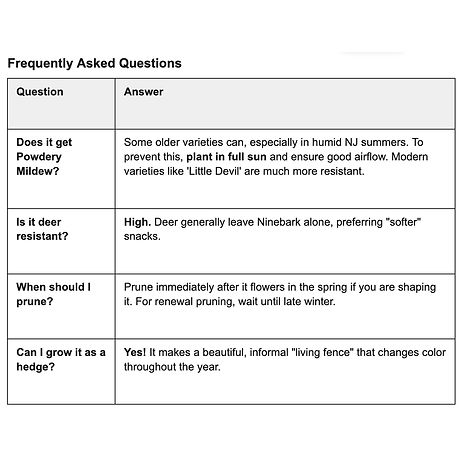
Designer Pro-Tip: Renewal Pruning. Ninebark is a fast grower. To keep it from looking "wild" or leggy, use the 1/3 rule: every year in late winter, prune out the oldest 1/3 of the branches all the way to the ground. This encourages fresh, colorful new growth and keeps the "peeling bark" look on the main stems.
Ecosystem & Wildlife Impact
Pollinator Buffet: The flower clusters are a favorite for Honeybees, Native Bees, and Butterflies.
The Bird's Pantry: Songbirds like Finches and Cardinals eat the seeds throughout the fall and winter.
Specialist Host: It is a host plant for the Columbia Silkmoth.