White Flowering Dogwood
Cornus florida
The Snowy Sentinel: Cornus florida (White Flowering Dogwood)
The Snapshot
Common Name: White Flowering Dogwood
Scientific Name: Cornus florida
Origin: Native to Eastern North America (The NJ State Memorial Tree)
Hardiness: Zones 5 – 9
The "Vibe": Timeless, ethereal, and structural; the "white linen" of the spring forest.
Why It’s a Masterpiece of Nature
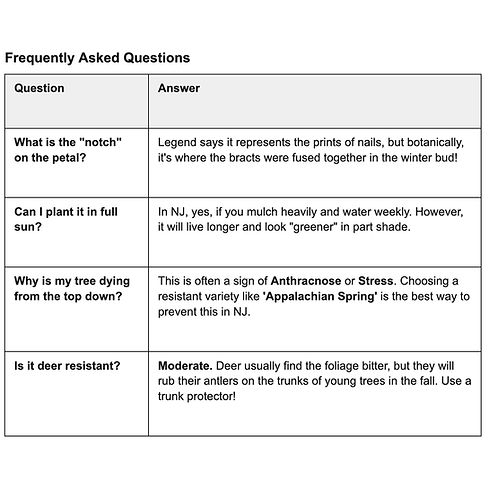
The Luminous Bloom: The large, white "petals" are actually modified leaves (bracts) with a characteristic notch at the tip. They emerge before the leaves, creating a horizontal "drift" of white that seems to float in mid-air.
Tiered Architecture: It is famous for its horizontal branching habit. Each layer of the tree acts like a shelf of flowers, giving it a pagodal, artistic silhouette even in winter.
The "Alligator" Bark: As the tree matures, the bark breaks into small, square blocks that look remarkably like alligator skin—a key identifying feature in the winter landscape.
Fall Fire: The leaves turn a spectacular deep burgundy-to-scarlet in autumn, accented by clusters of glossy, bright red berries.
Ecosystem & Wildlife Impact
The High-Fat Pantry: The red fruits are packed with calcium and fat. They are the "energy bars" that sustain over 35 species of birds (including Bluebirds and Hermit Thrushes) during their fall migration.
The Azure Nursery: It is the primary host plant for the Spring Azure Butterfly.
Specialist Bees: Look for the Andrenid bees, which emerge early specifically to forage on Dogwood pollen.
Designer Tips: Where to Plant
The Woodland Transition: Plant them along a property line where a lawn meets mature trees. They will naturally "lean" out, creating a stunning tiered effect.
The Specimen Anchor: A single White Dogwood in a semi-shaded front yard provides a focal point that changes beautifully with every season.
The "Cool" Color Palette: Pair it with Native Columbine (Aquilegia) and Ferns. The white tiers above the delicate textures below create a sophisticated "secret garden" feel.
Designer Pro-Tip: Native Dogwoods are sensitive to lawnmowers and weed-whackers. Their bark is thin, and a single strike can invite borers or disease. Always create a wide mulch ring around the base of the tree to keep equipment at a safe distance and to keep those shallow roots cool.