Blue Atlas Cedar
Cedrus atlantica
The Silver Sculpture: Cedrus atlantica (Blue Atlas Cedar)
The Snapshot
Common Name: Blue Atlas Cedar
Scientific Name: Cedrus atlantica 'Glauca'
Origin: Atlas Mountains of Morocco (A true "mountain" tree)
Hardiness: Zones 6 – 9 (Perfect for most of NJ, though it needs protection in the extreme NW corners).
The "Vibe": Artistic, majestic, and high-end; the "Grand Piano" of the garden.
Why It’s a New Jersey Luxury Essential
The "Icy Blue" Needles: The foliage isn't just blue; it’s a shimmering, powder-blue that looks almost metallic. It stays this color all year, providing a massive contrast against the brown NJ winter landscape.
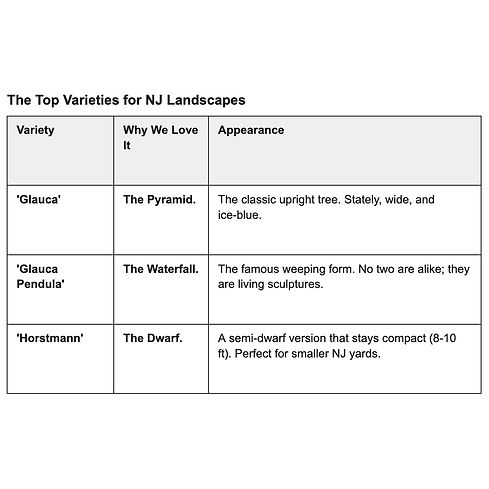
The "Weeping" Varieties: Most NJ homeowners opt for the 'Glauca Pendula' (Weeping) version. It can be trained to crawl over a wall, arch over a gate, or "weep" like a blue waterfall. Every single one is a unique work of art.
Salt & Heat Tough: Despite its "fancy" look, it is remarkably drought-tolerant and handles the salt air of the Jersey Shore better than almost any other high-end conifer.
Stately Scale: The upright versions grow into massive, wide-spreading giants that look like something out of a classic English manor.
Stories from the Garden
"I have a Weeping Blue Atlas Cedar right next to my front porch in Short Hills. It’s the centerpiece of the whole house. I’ve trained it to arch over the walkway, and the silvery needles look incredible at night under the landscape lights. It survived that brutal ice storm we had last year with zero damage. It’s slow-growing, which is great because it doesn't outgrow its space quickly, but every inch it grows is beautiful."
— Julian R., Zone 6b Gardener (Short Hills, NJ)
Designer Tips: Where to Plant
The "Cornerstone" Specimen: Use a Weeping Blue Atlas Cedar as the primary focal point of a front-yard garden bed. Surround it with low-growing 'Nikko' Deutzia or White Roses to make the blue pop.
The Living Sculpture: Plant one near a stone or brick wall. The contrast between the rigid stone and the "dripping" blue branches is a professional-level design move.
The "Moon" Garden: Because the needles are so light and silvery, they reflect moonlight. Plant it where you can see it from your window at night.
Designer Pro-Tip: The "Winter Burn" Shield. While hardy to Zone 6, young Atlas Cedars can get "needle burn" from the drying North Jersey winds in January. For the first two years, spray the needles with Wilt-Pruf in late November to keep them hydrated until their roots are deep enough to handle the wind.