
🌿 STOP Buying Wood Mulch! Why "Green Mulch" is the Ultimate Garden Hack (Plant THIS in Fall!) 🚨🌸
Stop! Put down the pitchfork and stop throwing away hundreds of dollars on wood mulch every single spring! You need Green Mulch!!

Welcome back to Bountiful Gardens! Today, we are breaking you out of the endless cycle of buying, hauling, spreading, and re-buying dyed wood chips. Why? Because nature never leaves bare dirt exposed, and nature certainly doesn't buy double-shredded hardwood.
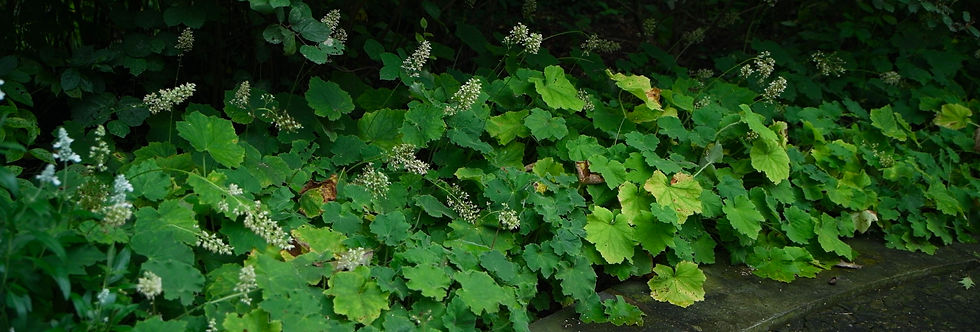
Instead, nature uses GREEN MULCH—living plants grown en masse to cover every square inch of your soil!

Here’s the no-brainer truth: Living groundcover builds soil structure through root exudates, feeds beneficial microbes, suppresses weeds completely, cools root zones, and saves you a small fortune in time and money over time. And best of all? It turns a flat brown garden bed into a dynamic, multi-layered masterpiece.

Now, I know what you’re thinking: "Groundcover is just that 2-inch creeping ivy or pachysandra, right?" WRONG!

If you plant it in mass to completely cover and protect the soil, IT IS A GROUNDCOVER! We are going all the way from ground-hugging carpets up to 6-foot tall prairie powerhouses!

And why are we talking about this right now? Because FALL IS THE ABSOLUTE BEST TIME TO PLANT GROUNDCOVER! The warm soil encourages massive root development before winter, autumn rains do the watering for you, and when spring hits, these plants explode into growth before weeds even wake up.

Stick around, because today we’re diving deep into the ultimate native plant lineup, their medicinal and wildlife value, and the exact 60/40 design secret to creating a self-sustaining living mulch. Let’s grow!

The Carpet Huggers (0 - 12 Inches)
Let's start down low with our Carpet Huggers. These are your ultra-low, foot-traffic-tolerant, soil-stitching natives that replace lawn, border walkways, or live at the base of trees and shrubs.

Wild Ginger (Asarum canadense)
One of our favorites in-store is Wild Ginger, with its beautiful heart-shaped green leaves that form a dense 6-inch canopy in shady areas of your yard. It’s been used traditionally in medicine to treat stomach ailments and respiratory infections.
Golden Ragwort in Spring Golden Ragwort in Fall
Golden Ragwort (Packera aurea)
You can also go with Golden Ragwort! Its semi-evergreen, heart-shaped basal leaves form a dense, weed-proof mat that throws up brilliant golden flowers in Spring. It’s a highly valuable early-season nectar source for bees, and best of all, this native will smother weeds without mercy.

Wild Stonecrop (Sedum ternatum)
Then there’s Wild Stonecrop. It has succulent, scalloped foliage and bright-white star-shaped flowers in Spring. These native, shade-tolerant perennials are a lifesaver for early native bees, and they’re great in rocky, dry soils.

Field Pussytoes (Antennaria neglecta)
You can also plant Field Pussytoes! They have silver-gray carpet-like foliage that looks like fuzzy cat paws when in bloom. They’re a drought-tolerant host plant for the American Lady Butterfly caterpillar.

Wintergreen (Gaultheria procumbens)
This groundcover perennial grows about 6 inches tall and produces iconic berries that you’ll see closer to Winter. The berries are edible and have a slightly sweet minty flavor that you’ll definitely recognize from wintergreen gum. Plus, this plant is an evergreen!

Allegheny Pachysandra (Pachysandra procumbens)
If you want to ditch the invasive Japanese Pachysandra, go with Allegheny Pachysandra! This Appalachian native features exquisite, silver-mottled foliage with fragrant Spring bottlebrush blooms.
Moss Phlox Woodland Phlox
Creeping & Woodland Phlox (Phlox stolonifera & Phlox subulata)
Another option is Creeping or Woodland Phlox. They have an absolute explosion of pink, purple, white and blue Spring blooms over lush green needle-like or broad foliage. They have been used in medicinal tea traditions by indigenous tribes for skin ailments, and they’re an essential early nectar source for Swallowtail butterflies.

Wild Strawberry (Fragaria virginiana)
And of course, we have Wild Strawberry, a fast-spreading runner plant with delicate little white flowers and small semi-sweet berries. The berries are packed with vitamin C, and the leaves are rich in antioxidants and make a great tea!

TIER 2: Mid-Layer Matrix Plants (1 - 3 Feet)
When you step up from carpets to 1 to 3 feet tall, you enter the world of Matrix Planting. By massing mid-sized plants, you create a living green carpet that holds heavy weed pressure, creates lush texture, and offers nesting cover for songbirds!

The Native Sedge Matrix (Carex species)
Sedges are the unsung heroes of ecological landscaping. They weave between perennials to lock down soil!
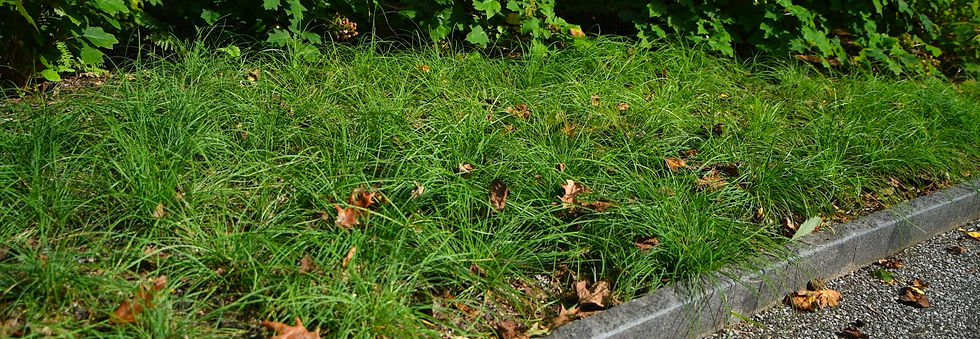
Pennsylvania Sedge (Carex pensylvanica): a soft-textured grass that makes a great native alternative to the American lawn.

Wood's Sedge (Carex woodii): A drought-tolerant grass that spreads by rhizomes to form a weed-proof turf.

Cherokee Sedge (Carex cherokeensis): Features arching, rich green foliage with ornamental seed heads, best for damp or sunny spots.

Woodland Ferns & Forbs

Christmas Fern (Polystichum acrostichoides): Evergreen, leathery fronds that lie flat in winter to shield soil from autumn erosion.
Foamflower in Fall Foamflower in Spring
Foamflower (Tiarella cordifolia): Heart-shaped leaves with frothy white flower plumes. Extremely high wildlife value for syrphid flies and native bees.
Heuchera villosa Heuchera 'Rio'
Coral Bells/Alumroot (Heuchera): Foamflower’s cousin! Provides a burst of color with its prismatic, scallop-shaped leaves for shady borders.

Great Blue Lobelia (Lobelia siphilitica): Vibrant blue flower spikes in late summer. Historically used in native medicine, this plant is a magnet for bumblebees and hummingbirds!

Mid-Sized Native Grasses
Little Bluestem Little Bluestem
Little Bluestem (Schizachyrium scoparium): Blue-green summer stems turning copper-orange in fall. Supports skipper butterfly larvae and provides winter seed for birds.
Northern Sea Oats Northern Sea Oats Northern Sea Oats
Northern Sea Oats (Chasmanthium latifolium): Features gorgeous oat-like seed heads that make for beautiful dried arrangements and offers fantastic habitat for wildlife.

TIER 3: The Prairie Structural Groundcover (3 - 6 Feet)
Now for the ultimate landscape hack: Taller prairie plants as structural groundcover! In large, sun-drenched yards, planting 3 to 6-foot natives en masse builds a massive, deep-root matrix underground and a sun-blocking canopy overhead. Weeds simply cannot survive here!

Structural Warm-Season Grasses

Switchgrass (Panicum virgatum): Deep, fibrous roots extending up to 10 feet into the earth—shattering compacted clay and building topsoil!
Yellow Indiangrass Big Bluestem
Yellow Indian Grass (Sorghastrum nutans) & Big Bluestem (Andropogon gerardii): The backbone of the tallgrass prairie. They filter runoff, sequester carbon, and provide critical overwintering habitat for beneficial insects.

High-Impact Flowering Forbs
Echinacea in Summer Echinacea in Fall
Purple Coneflower (Echinacea purpurea): Highly medicinal (immune-system booster!), edible root tea history, and goldfinches feed on the dried seed heads all winter.
Wild Bergamot Wild Bergamot Wild Bergamot
Wild Bergamot (Monarda fistulosa): Antimicrobial, thymol-rich leaves make a delicious tea! Essential for specialist bees and clearwing hummingbird moths.
Blue False Indigo in Spring Blue False Indigo in Fall
Blue False Indigo (Baptisia australis): Deep taproots fix nitrogen directly into your soil! Massive blue spring blooms give way to charcoal seed pods.
Joe Pye Weed Joe Pye Weed
Joe-Pye Weed (Eutrochium purpureum): Towering vanilla-scented pink flowers. An absolute magnet for monarch butterflies!
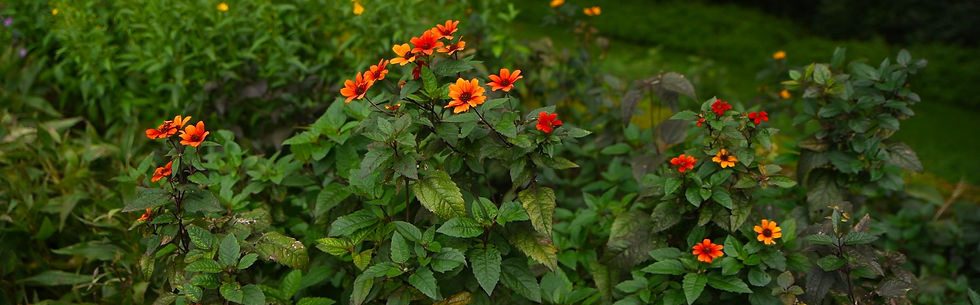
False Sunflower (Heliopsis helianthoides): Non-stop yellow blooms from mid-summer through frost.

THE FORMULA: How to Design & Plant Right Now!
Here is the professional designer secret for a self-sustaining living mulch: The 60/40 Matrix Formula.

60% to 70% Matrix Layer: Plant your structural grasses or sedges evenly across the area. They fill the root zone and ground layer.

30% to 40% Color Drifts: Interweave repeating drifts of 3 to 4 flowering species inside that grass matrix.

This mimics natural ecosystems, stops plants from flopping over, suppresses 99% of weeds, and eliminates the need for bagged wood mulch forever!

If you’re local, you can stop in at Bountiful Gardens in Hillsborough, Ewing, and Ringoes NJ anytime. If you are not too local, you can order our economical 3.5” Deep Pots to be shipped from our native nursery, East Coast Natives.

Remember—Fall is the golden window! Every plant you put in the ground today builds roots all winter long so that next spring, your garden explodes into a zero-maintenance, weed-drowning paradise.

We have ALL of these native groundcovers, sedges, ferns, and prairie powerhouses in stock right now at Bountiful Gardens! Stop by the nursery today to pick up your native plant packs!

Until next time, ditch the bag, plant green mulch, and keep growing with Bountiful Gardens!


Comments