
🌼 The Rudbeckia Revolution: Beyond the Basic Black-Eyed Susan 🐝 WATCH the Video!
- 6 hours ago
- 6 min read
Let’s play a quick game of gardening word association. When you hear the words "summer garden," what comes to mind? For most people across North America, it is the classic Black-Eyed Susan.

It is a plant that is absolutely everywhere. You see it anchoring high-end landscape designs, brightening up your grandma's backyard, and somehow surviving in that baking, neglected strip of dirt out in front of the local gas station.

Because it is so common, many gardeners assume Rudbeckia is just a one-trick pony—a basic, bulletproof yellow daisy. But if you think you know this plant family, you are missing out on one of the most versatile, bizarre, and historically fascinating genera on the planet. Welcome to the Rudbeckia Revolution.

Whether you are looking to support local wildlife, add architectural drama to your borders, or experiment with cutting-edge plant hybrids, the Rudbeckia family has something spectacular for your yard.

📜 From Pioneer Pharmacy to Botanical Flattery: A Dash of History
Before adding these rugged beauties to your landscape, it helps to understand where they came from. The history of Rudbeckia is deeply tied to North American ecology and early botanical science.
The Origin of the Name

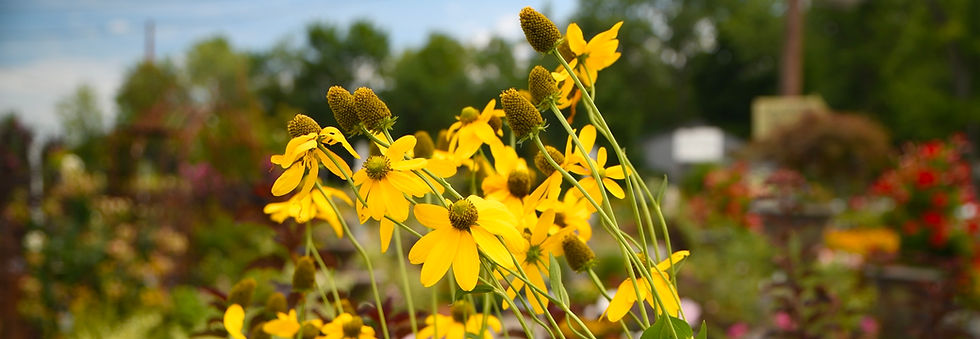
How did this classic American wildflower end up with a Swedish name? In the 1700s, Carl Linnaeus—the famous "Father of Taxonomy"—named the genus after his beloved botany professor, Olof Rudbeck. Linnaeus actually wrote his mentor a letter, explaining that he chose this bright flower because it was tall, unbothered, and quote: "Its rayed flowers will bear witness that you shone among savants like the sun among the stars." That is a level of botanical flattery we rarely see in modern landscaping!

The Original Homegrown Immune Booster

Long before it was shipped off to European estate gardens, Rudbeckia was a staple of the North American plains. It served as a vital pioneer pharmacy. Native American tribes, including the Cherokee and Ojibwe, utilized the roots and leaves of native varieties as a powerful medicinal herb. They applied poultices to treat snakebites, used root juice to soothe earaches, and brewed the leaves into tea to stimulate the immune system and ward off colds.

It was essentially the original, homegrown immune booster, standing shoulder-to-shoulder with its famous cousin, Echinacea (Coneflower). Keep that family connection in mind, because that genetic relationship is driving the biggest modern miracle in gardening today.

🌾 The Native Legends: Low-Maintenance, High-Impact Survivors

If you are dealing with blistering summer heat waves or unpredictable droughts, turning to native species is your best bet for a resilient landscape. Native Rudbeckia species laugh in the face of neglect and carry your garden's color beautifully straight into autumn.

Rudbeckia hirta: The original Black-Eyed Susan and the official state flower of Maryland. It thrives on pure neglect and brings instant cheer to sunny borders.

Rudbeckia fulgida: The Eastern Coneflower. This is your rugged, perennial backbone that spreads beautifully to form massive, golden-yellow domes.

Rudbeckia laciniata: The Cutleaf Coneflower. If you have an unsightly view or an annoying neighbor you want to block out, this is your plant. It rockets up to 8 feet tall and blooms prolifically in late summer.

Rudbeckia subtomentosa: The Sweet Coneflower. On a hot summer afternoon, its lush foliage gives off a distinct, sweet scent resembling anise or vanilla.

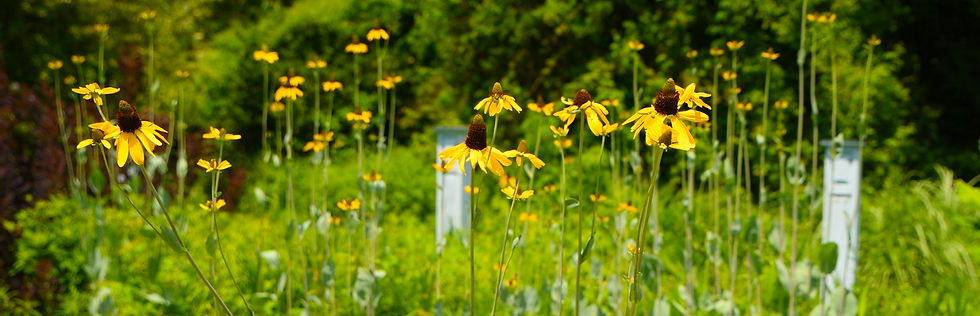
Rudbeckia maxima: The Great Coneflower. If you want your landscape to look like it was designed by Dr. Seuss, you need this plant. It produces massive, cabbage-like, powdery-blue leaves at the base, shooting up towering 7-foot stalks topped with giant yellow flowers and alien-looking black cones.
🎨 The Designer Cultivars: Rule Breakers & Starbursts
Perhaps you love the toughness of native plants but crave colors and textures that look like they belong in a high-end architectural magazine. That is where modern plant breeding comes in.

🛑 Public Service Announcement: There's SO Much More than 'Goldsturm'
For decades, 'Goldsturm' was the industry standard for commercial landscaping. However, it has a flaw: it is notoriously susceptible to an ugly black leaf spot fungus halfway through the summer. If you want a clean, disease-free yard, it is time to upgrade to these newer varieties:
Rudbeckia fulgida 'American Gold Rush' Rudbeckia fulgida 'Glitters Like Gold'
'American Gold Rush' & 'Glitters Like Gold': Both of these incredible varieties provide that classic, massive dome of bright golden flowers. However, their slightly hairy foliage makes them completely immune to leaf spot. 'Glitters Like Gold' lives up to its name, pumping out deeper, richer yellow blooms that sparkle in the late summer sun.

'Goldblitz': If you are impatient, this is your plant. It fixes the disease flaws of older varieties and blooms heavily in its very first season for instant garden gratification.

Architectural Drama and Bold Colors
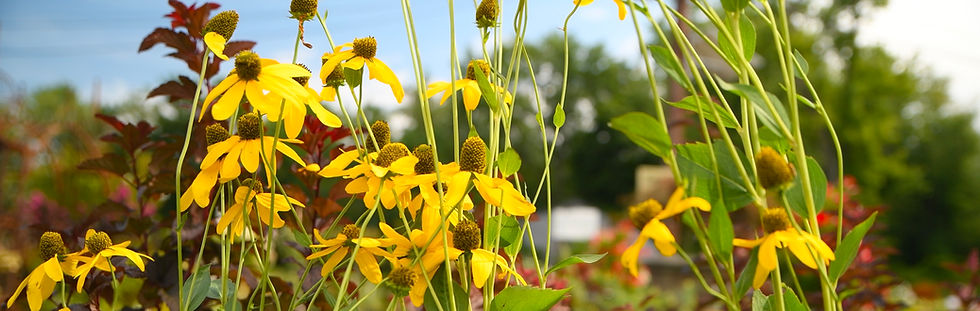
'Herbstsonne' (Autumn Sun): This 7-foot monster features dramatic, swept-back yellow petals that droop down from a prominent, bright green central cone.
Rudbeckia subtomentosa 'Henry Eilers' Rudbeckia subtomentosa 'Little Henry'
'Henry Eilers' & 'Little Henry': Discovered as a wild mutation of the sweet coneflower, this unique variety features petals that are perfectly rolled up into tight little tubes or "quills." Every single bloom looks like a bursting yellow star. 'Little Henry' offers this exact same starburst look in a smaller, tidier package.
Rudbeckia fulgida 'Little Gold Star' Rudbeckia fulgida 'Sweet as Honey' Rudbeckia fulgida 'Viette's Little Suzy'
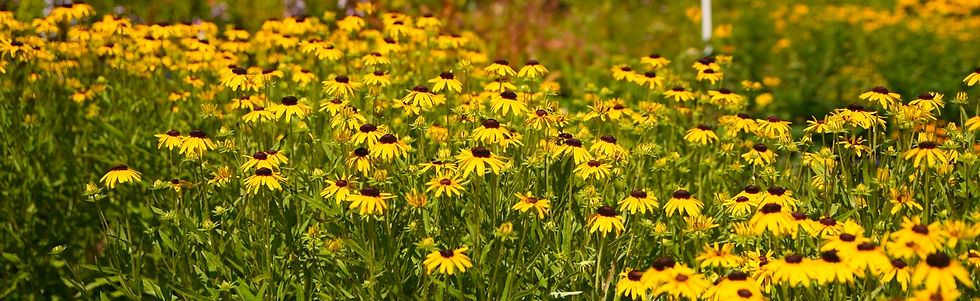
'Little Gold Star,’ ‘Sweet as Honey’ & 'Viette’s Little Suzy': Perfect for the front of a border or container gardening. 'Little Gold Star' is a knee-high blooming machine that produces a canopy of star-shaped flowers so dense you can barely see the green foliage underneath.
🧬 The "Franken-Flower" Miracle: Echibeckia

We saved the best for last. Remember how closely related Rudbeckia and Echinacea are? Brilliant botanical breeders recently asked a wild question: What if they had a baby?
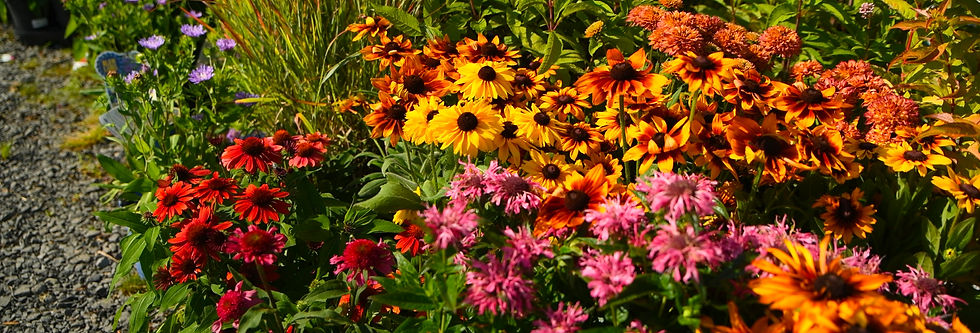
The result is an incredible intergeneric hybrid called Echibeckia. It is the ultimate garden super-plant. It takes the massive bloom size, unique color palettes, and disease resistance of the Coneflower (Echinacea) and combines it with the rapid growth, extreme heat tolerance, and massive flower production of the Black-Eyed Susan (Rudbeckia).

The elite Summerina and Summerina Glow series are completely rewriting the rules of late-summer garden design:

'Sugar Shake': Features layer upon layer of double petals in dusky pinks, cherry, and peach, all fading into a chartreuse-lime center. It looks like a living watercolor painting.

'Suns Up': Delivers massive, clear, bright yellow semi-double blooms accented by a dark, dramatic central eye.
Echibeckia 'Blazing Fire' Echibeckia 'Sizzling Sunset'
'Blazing Fire' & 'Sizzling Sunset': If you want to set your garden on fire, these varieties pump out the most insane, burnt-orange, mahogany, and deep autumn-red tones you will ever see on a living flower.

'Sunreef': Brings warm, golden, ocean-sunset vibes to your pots and mixed borders.
Echibeckia varieties bloom continuously for months, do not require staking, handle intense humidity like champions, and thrive beautifully across a wide range of growing zones.

🐦 The Ecological Payoff: A Winter Lifesaver for Wildlife

Beyond their undeniable curb appeal, dedicating garden real estate to the Rudbeckia family provides massive ecological benefits. Right when your spring annuals and early perennials are looking exhausted and crispy, these plants step up to carry your garden's color palette straight through the autumn transition.

Furthermore, they act as an absolute VIP lounge for native wildlife. When the flowers finally fade in late autumn, do not cut them down! Leave those structural brown and black seed heads standing all winter long. They turn into a natural, homegrown bird feeder, keeping local populations of American Goldfinches fed through the coldest months of the year.

🛒 Bring the Revolution to Your Yard
Whether you choose the architectural heights of the native Rudbeckia maxima, the tidy dwarf canopy of 'Little Gold Star', or the jaw-dropping multi-toned petals of the new Echibeckia hybrids, you cannot fail with this rugged plant family.

🏡 Local to New Jersey? Come See Us to Join the Rudbeckia Revolution Today!
If you live in or are traveling through the Garden State, come stroll through our massive garden centers to see these spectacular late-summer colors in person! Our enormous Rudbeckia selection is available at both our Ewing and Hillsborough locations:
Bountiful Gardens (Hillsborough): 135 US-206, Hillsborough Township, NJ | (908) 526-5500
Bountiful Gardens (Ewing): 1536 Lower Ferry Rd, Ewing Township, NJ | (609) 583-5167


Comments