
Perennials for Mid-May Magic in Sun & Shade!
- May 15
- 5 min read
The landscape is full of mid-Spring blooms! Join us as we explore New Jersey and Pennsylvania on the hunt for the season's finest flowers.
Key Points:
Irises are sun-loving, Spring-blooming allstars with endless varieties and a unique photosynthetic strategy.
Ornamental Allium is one of the oldest cultivated plants on the planet and is highly deer resistant
Peonies love part shade, are a pollinator magnet, and make fragrant cut flowers.
English Bluebells are related to Hyacinths, making them highly deer & rabbit resistant.
Summer Snowflake is in the onion family, so it won't be browsed by deer or rabbits
Golden Alexander thrives almost anywhere and is a critical host plant for butterflies.
Conquer that dry, shady, sandy spot in the yard with Barrenwort!
Brunnera is a classic shade-loving plant for moist, rich areas.
Red Buckeye is a canopy-level hummingbird magnet whose seeds bring good luck.
Fringetree is a unique native tree with long, fragrant flowers
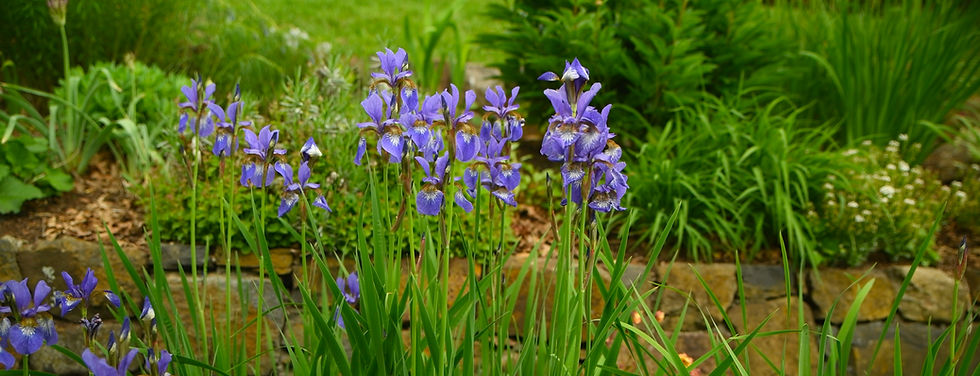
Welcome back to Bountiful Gardens! Can you believe it’s already the middle of May? Gardens all across the state are bursting with mid-Spring flowers, and you DON’T want to miss them, so let’s head back out into the field to take in all the beauty.

Iris - Iris spp.
Glistening in sunny perennial gardens right now, you’ll find a stunning array of Irises. Because they’re so quick to hybridize with other Iris species, the diversity of colors and patterns you can encounter is insane.

Unlike most flowering plants, Irises can actually photosynthesize with both sides of their tropical-looking leaves, giving them the energy they need to produce their huge, colorful flowers at a time when there’s SO much competition for pollinators in the garden. These bumblebee-loved perennials thrive in rich, well-drained soil and will form a colony over time.

Ornamental Allium - Allium spp.
Often found alongside Irises is the Ornamental Allium. While it’s a member of the onion family, these bulbs aren’t for eatin’—they’re a floral firework display! Bees and butterflies flock to their globe-shaped blooms, and when bruised, their leaves give off an onion-y scent, which deer and rabbits can’t stand. These perennials are happiest in full sun in well-draining sandy or loamy soils.

Historically, Alliums are one of the oldest cultivated plants on Earth, even appearing in ancient Egyptian art and inscriptions. Ornamental Alliums may not have gained popularity until the 1800’s, but when you plant them, you’re connecting to the legacy of horticulture itself.

Peony - Paeonia
If you’re a fan of floral fragrance, you’ll be floored by Peonies, and they’re just starting to open up! These sweet-smelling perennial powerhouses do best in full sun to part shade in rich, well draining soil.

Their flowers are rich in pollen and nectar, making them a favorite for honeybees, bumblebees and beneficial ants. If you want to scent your whole house, just snip a few flowers and bring them inside!

English Bluebells - Hyacinthoides non-scripta
For delicate blue, pink and white flowers you and your pollinators can rely on Spring after Spring, you can plant English Bluebells. As you might have guessed from its appearance, this perennial is a member of the Hyacinth family, lending it high deer and rabbit resistance.

In folklore, these flowers are commonly associated with dark fairy magic in their native Western Europe. It works best planted in swaths in partly shaded areas of the garden, like under Azaleas along a path, and prefers average to moist well-draining soils.

Summer Snowflake - Leucojum aestivum
Another plant that thrives in these conditions is Summer Snowflake, with its dainty, white drooping flowers. Thanks to being another member of the Onion family, these perennial bulbs enjoy excellent deer and rabbit resistance.

Golden Alexander - Zizia aurea
Glowing in a great variety of conditions is our native Golden Alexander. This perennial wildflower serves as a host plant for both Black and Ozark Swallowtail butterflies, and it’s incredibly adaptable.

Though their “ideal” conditions are part-shade with moist well-draining soil, they can still thrive in full sun and drier soils as long as they get enough moisture early in the growing season.

Epimedium - Barrenwort
Dry, shady spots are notoriously hard to plant, but they pose no obstacle for Epimedium! This is one of the toughest evergreen ground cover perennials you can plant, even boasting incredible deer resistance.

It’s also known as Bishop’s Cap thanks to its whimsical, wacky flowers that often resemble the headwear of clergymen. Epimedium is a famously medicinal plant, used to prevent osteoporosis, boost immunity, fight depression and much, much more.

Brunnera - Siberian Bugloss
One of the most classic perennials for a shady spot has to be Brunnera, and it’s been sending out its bright blue blooms for a few weeks now. Its flowers are strikingly similar to those of Forget-Me-Nots, so it’s no surprise one of its common names is “False Forget-Me-Not”.

More often, it goes by the moniker of Siberian Bugloss, thanks to the shape of its lush, often highly decorated leaves. This plant thrives in rich, moist, well-draining soil and enjoys solid deer and rabbit resistance.

Red Buckeye - Aesculus pavia
Looking for a focal point in the landscape? Check out Red Buckeye. This native deciduous tree is able to adapt to both full shade and full sun, as long as it’s planted in moist, well-draining soil.

Hummingbirds and bees absolutely flock to these flowers, and once they go to seed, they’re a delicacy for squirrels, though sadly they’re not edible for us humans. However, in American folklore, carrying a Red Buckeye seed in your pocket will at least give you some good luck!

Fringe Tree - Chionanthus virginicum
Last up, we have a native member of the Olive family, the Fringe Tree! This mid-story stand-out features fragrant, strap-like flowers that develop into berries that our native birds depend on. If you want more flowers, plant it in full sun. For lusher foliage, plant in part-shade. Either way, your Fringe Tree will want average to moist, well-draining soil.

Watch all of the above in video form below!

Comments