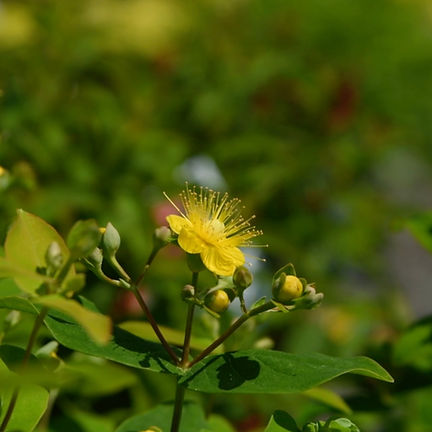
St. Johns Wort
Hypericum
The Golden Glow: Brilliant Resilience with Hypericum
The Snapshot
Common Name: St. John’s Wort, Rose of Sharon (though distinct from the Hibiscus species)
Scientific Name: Hypericum spp.
Origin: Diverse (Species native to North America, Europe, and Asia)
Hardiness: Zones 4 – 9 (Varies by species)
The "Vibe": Cheerful, electric, and unshakeable; a burst of sunshine for any corner.
Why We Love It
Hypericum is famous for its high-impact yellow flowers, which feature a dramatic explosion of long, thread-like stamens in the center, making each bloom look like a tiny sunburst. Beyond the flowers, many varieties produce striking ornamental berries in shades of coral, red, or black that are highly prized by florists. They are exceptionally tough plants, often used for erosion control because they can thrive in rocky, poor soil where other plants fail.
Ecosystem & Wildlife Impact
The "Bumblebee Brush": The dense clusters of stamens are a favorite for bumblebees, who "buzz-pollinate" the flowers, vibrating them to release a cloud of golden pollen.
Winter Bird Pantry: While the berries aren't the first choice for birds, they provide a valuable late-winter food source for thrushes and catbirds once other options are gone.
Pollinator Corridor: Provides a steady source of pollen during the mid-summer gap when many spring flowers have finished and fall flowers haven't yet begun.
Designer Tips: Where to Plant
The "Erosion Buster": Use low-growing varieties like H. calycinum to stabilize steep, sunny banks. Their roots form a dense mat that holds soil perfectly.
The "Bouquet" Border: Plant the berry-producing varieties (H. inodorum) near the house. You’ll want them close by so you can snip the berry-laden stems for autumn floral arrangements.
Dappled Woodland Edge: Many species thrive in the "transition zone" between a manicured lawn and a wooded area, providing a soft, glowing border.
Designer Pro-Tip: To get the best berry show, don't be afraid to prune hard in late winter or early spring. Hypericum blooms on "new wood," so cutting it back to about 6–12 inches will result in a flush of vigorous new growth and a much heavier crop of flowers and fruit.
Stories from the Garden
"I have a steep, sandy hill in my backyard that was a nightmare to mow. I planted Hypericum groundcover, and now it’s a solid carpet of green and gold. It’s been three years, and I haven't had to weed that area once. It’s the best landscaping decision I ever made."
— Tom B., Zone 7 Gardener
A Growing Story: The Hidden Sunburst
A customer once told us she bought Hypericum for the berries, but she fell in love with the "whiskers." She spent a whole afternoon photographing the long stamens, saying they looked like a "silent firework" caught in mid-explosion. It’s a plant that invites you to look closely at the details.