Peonies
Paeonia
The Garden Matriarch: Timeless Glamour with Paeonia
The Snapshot
Common Name: Peony
Scientific Name: Paeonia spp.
Origin: Native to Asia, Europe, and Western North America
Hardiness: Zones 3 – 8 (They need the winter cold to set buds!)
The "Vibe": Opulent, romantic, and prestigious; the "Main Event" of the late spring garden.
The Three Main Types
Herbaceous Peonies: The most common. They die back to the ground every winter and sprout fresh and green in the spring.
Tree Peonies: These have woody stems that do not die back. They grow into small shrubs and typically bloom earlier with massive, papery flowers.
Itoh (Intersectional) Peonies: A hybrid of the two. They have the massive flowers of a Tree Peony but the easy-care habit of an Herbaceous Peony.
Ecosystem & Wildlife Impact
The Ant Alliance: You will almost always see ants on Peony buds. They aren't pests! They are eating the sweet nectar secreted by the buds, and in return, they protect the plant from other "bad" bugs. They don't help the flower open; they're just part of a classic garden friendship.
Early Summer Pollen: The large, open-faced varieties (Singles and Japanese types) are high-value targets for large Bumblebees.
Butterfly Nectar: Provide a rich energy source for Swallowtails during their peak spring activity.
Designer Tips: Where to Plant
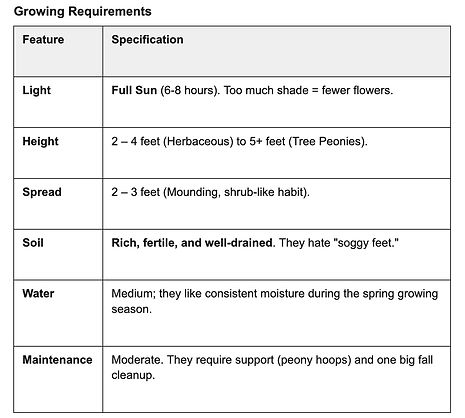
The "Forever" Spot: Peonies have massive taproots and hate to be moved. Pick a spot where they can stay for the next 50 years.
The Spring Anchor: Use them as a structural anchor in the middle of a perennial bed. Their lush, dark green foliage looks like a tidy shrub even after the flowers fade.
The Cutting Garden MVP: Peonies are the gold standard for floral arrangements. Harvest them in the "marshmallow stage" (when the bud feels soft but isn't open) for a vase life of over a week.
Designer Pro-Tip: The #1 reason Peonies fail to bloom is planting too deep. The "eyes" (the little pink buds on the root) should be no more than 1.5 to 2 inches below the soil surface. If they are deeper, the plant will grow beautiful leaves but never produce a single flower!
Stories from the Garden
"I have a row of white Peonies that my grandmother planted in 1948. Every June, the smell fills my entire backyard. They’ve survived droughts, floods, and three different owners of this house. They are more like family members than plants at this point."
— Rosemary G., Zone 5 Gardener
A Growing Story: The Marshmallow Trick
A customer once told us she wanted to use Peonies for her daughter's wedding but was worried they wouldn't bloom in time. We taught her the "marshmallow" trick—cutting the buds when they feel soft, wrapping them in newspaper, and putting them in the fridge. She kept them "on hold" for three weeks and brought them out to bloom perfectly on the wedding day!