Bountiful Gardens
Swiss Chard
Beta vulgaris
Swiss Chard (Beta vulgaris)
Chard is a nutritional powerhouse, often called "the silverbeet." On a patio, it is arguably the most ornamental vegetable you can grow. A pot of 'Bright Lights' chard looks more like a tropical flower display than a salad ingredient.
Setting the Stage for Success
Soil & Fertilizer
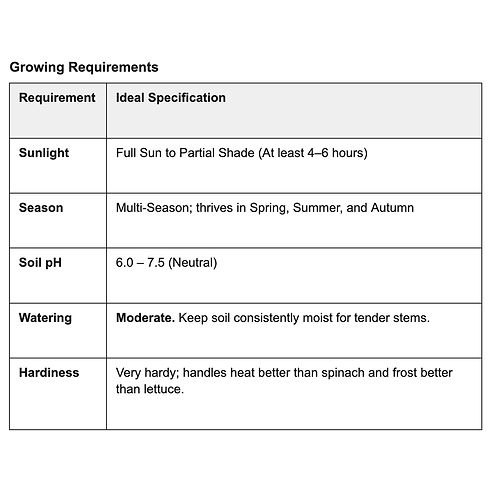
Chard is a "foliage factory." To keep those stems thick and those leaves glossy, it needs a steady supply of nitrogen.
The Soil: Use a rich, organic potting mix. Because chard grows quite large (up to 2 feet tall), use a pot that is at least 10–12 inches deep.
Feeding: Use a high-nitrogen organic liquid fertilizer every 2–3 weeks. If the leaves start to look pale or yellowish, it’s likely hungry for a nitrogen boost.
The "Infinite" Harvest
Chard is a "cut-and-come-again" vegetable.
The Strategy: Never pull the whole plant out of the ground. Instead, harvest the outermost leaves by snapping them off at the base. The center of the plant will continue to push out new, tender leaves all season long. One single plant can provide harvests for six months or more.
Maintenance, Trimming & Troubleshooting
Managing the "Bolting"
While chard is heat-tolerant, very long, hot days might cause it to send up a tall flower stalk.
The Fix: If you see a thick, central stalk starting to shoot up, snip it off immediately. This "tricks" the plant into staying in its leafy stage for a few more weeks.
Troubleshooting
Leaf Miners: You might see "transparent" or brown squiggly tunnels inside the leaves. These are tiny larvae. Simply pinch off the affected leaf and dispose of it—do not compost it.
Aphids: They love the underside of the crinkled leaves. A sharp blast of water from the hose is usually enough to knock them off.
Flavor & Culinary Delight
Chard has a flavor profile that sits right between spinach and beets—earthy, mineral-rich, and slightly salty.
Two Ingredients in One: Treat the leaves like spinach (sautéed or steamed) and the stems like asparagus or celery. Sauté the chopped stems first for 4 minutes before adding the leaves to the pan.
The "Wrap": Because the leaves are so large and sturdy, they make excellent low-carb "wraps" for turkey or tuna salad.
Chard Chips: Just like kale, you can toss chard leaves in olive oil and salt and bake them at 300F until crispy.
Pro-Tip: The "Color-Bleed" Trick
If you are cooking 'Ruby Red' or 'Bright Lights' chard, the vibrant pink and red pigments will "bleed" into other foods (like potatoes or eggs) just like beets do. If you want to keep your dish looking clean, steam or blanch the chard separately and add it at the very last second before serving!