'Sugary Cherry' Tomato
Solanum lycopersicum
The 'Sugary' Cherry (Semi-Determinate)
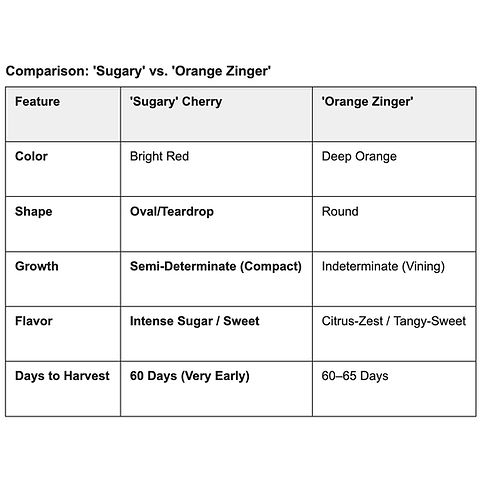
'Sugary' is unique because it is semi-determinate. It offers the best of both worlds: it grows in a more compact, manageable bush than a wild indeterminate vine, but it produces fruit much more continuously than a strict determinate. The fruits are distinctively "egg-shaped" or teardrop-shaped with a tiny pointed "nipple" on the bottom.
Setting the Stage for Success
Soil & Fertilizer
Because 'Sugary' is such a prolific producer (often having 15–20 fruits per cluster), it needs a steady "IV drip" of nutrients.
The Soil: Use a 7 to 10-gallon container. A larger pot provides a buffer for moisture; if the plant dries out too much, the sugars can become too concentrated and the skin can become tough.
Feeding: Use a balanced organic fertilizer at planting. Once the first tiny green teardrops appear, use a liquid High-Potassium (K) fertilizer every 7–10 days. This is the secret to getting that "candy" flavor.
The "Semi-Determinate" Advantage
Support: 'Sugary' typically reaches 4 to 5 feet tall. A standard tomato cage or a medium stake is usually sufficient. It doesn't require the massive scaffolding that 10-foot vines need, making it perfect for smaller patio spaces.
Maintenance, Trimming & Troubleshooting
Managing the Yield
Pruning: You don't need to be as aggressive with pruning as you would with a 'Big Boy'. However, thinning out some of the inner foliage will improve airflow and allow the sun to hit the fruit, which speeds up ripening.
Harvesting: Pick these when they are a vibrant, glossy red. Because they are so sweet, birds and squirrels will be very interested. If you see them lurking, you can pick the clusters when they are "pink-red" and let them finish on the counter.
Common Issues
Skin Splitting: While 'Sugary' is fairly resilient, very heavy rain can cause the thin, tender skin to pop. If you know a big storm is coming, harvest any ripe fruit immediately.
Flavor & Culinary Delight
The flavor is precisely what the name suggests: Sugary. It has a very low acid content, making it taste more like a fruit than a traditional tomato.
The Grazing Garden: This is the #1 variety for getting kids to eat their vegetables. They are the perfect size for "popping" whole.
Salad "Jewels": Because of their unique oval shape, they look beautiful when tossed into a salad with round cherry tomatoes for textural contrast.
Dried "Raisins": If you have a surplus, cut them in half and dehydrate them. Because they are so sweet, they turn into "tomato raisins" that are incredible in winter salads or on pizza.
Pro-Tip: The "Sugar Snap" Test
For the absolute best flavor, don't refrigerate these. Cold temperatures kill the volatile compounds that create that "sugary" aroma. Pick them, wash them in lukewarm water, and eat them at room temperature for a flavor that will ruin grocery-store tomatoes for you forever!