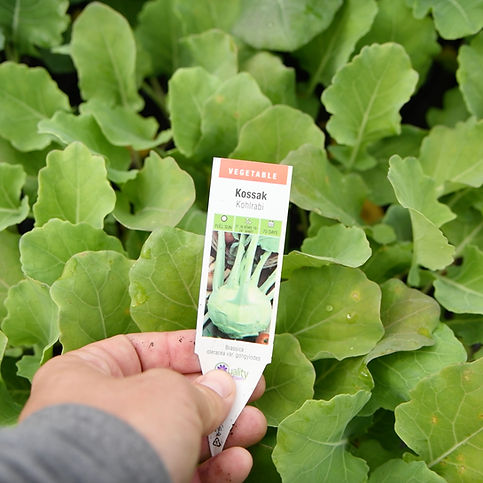
Kohlrabi
Brassica oleracea var. gongylodes
Kohlrabi (Brassica oleracea)
Kohlrabi is a cool-season specialist. Unlike other root vegetables, the part you eat is actually a swollen stem that grows above the ground, not a root. This makes it a fantastic visual treat in containers, as you can watch the "spaceship" expand right before your eyes.
Setting the Stage for Success
Soil & Fertilizer
Kohlrabi is a "fast-track" grower. To get that crisp, juicy texture, it needs a constant supply of nutrients and moisture.
The Soil: Use a high-quality potting mix. Because the "bulb" sits on top of the soil, the pot only needs to be about 8–10 inches deep.
Feeding: Use a balanced organic liquid fertilizer every 2 weeks. If the plant grows too slowly, the bulb will become tough and stringy.
Spacing: In a container, give each plant about 4–6 inches of space so the bulbs have room to expand without touching.
The "Watering" Secret
If the soil dries out completely and you then drench it, the bulb may "split" like a tomato. Keep the moisture levels as steady as a wrung-out sponge.
Maintenance, Trimming & Troubleshooting
Harvesting: The "Sweet Spot"
The Timing: Most varieties are at their peak flavor when the bulb is between 2 and 3 inches in diameter (about the size of a tennis ball).
The Leaves: Don't throw them away! Kohlrabi leaves are edible and can be cooked exactly like kale or collard greens.
Storage: Once harvested, cut off the leaves (save them for a sauté!) and the bulb will keep in your refrigerator for several weeks.
Troubleshooting
Cabbage Worms: Just like its cousin Broccoli, Kohlrabi can attract small green caterpillars. Check the undersides of the leaves once a week.
Woodiness: If you leave the bulb in the ground too long (especially in hot weather), it develops a "bark" that is impossible to chew. Harvest early and often!
Flavor & Culinary Delight
Kohlrabi is the most versatile "crunch" in the kitchen. It has a mild, peppery sweetness that works both raw and cooked.
The Raw Crunch: Peel off the tough outer skin, slice the interior into matchsticks, and toss with lemon juice, olive oil, and sea salt for a refreshing slaw.
Kohlrabi Fries: Toss cubes in oil and spices and roast at 425F until the edges are caramelized. It tastes remarkably like roasted artichoke hearts.
Purée: Boil with a potato and mash with butter for a "low-carb" mashed potato alternative with a sophisticated flavor.
Pro-Tip: The "Peel Test"
If you aren't sure if your Kohlrabi is still good or has become "woody," try to nick the bottom of the bulb with your fingernail. If it's hard to pierce, it's starting to get fibrous—harvest it immediately and plan on roasting it rather than eating it raw!