Bountiful Gardens
Fennel
Foeniculum vulgare
Fennel (Foeniculum vulgare)
Fennel is a member of the carrot family and is a "triple threat" in the garden: the bulb, the fronds, and the seeds are all edible. On a patio, its fine-textured foliage acts as a beautiful "see-through" plant that catches the light and the wind.
Herb Fennel vs. Bulb (Florence) Fennel
It is important to know which one you are growing, as they behave differently:
Herb Fennel: Grown for its leaves and seeds. It can grow up to 5 feet tall and does not produce a large bulb.
Florence (Bulb) Fennel: Grown for its thickened, succulent base. It stays shorter (about 2 feet) and is usually harvested as an annual.
Setting the Stage for Success
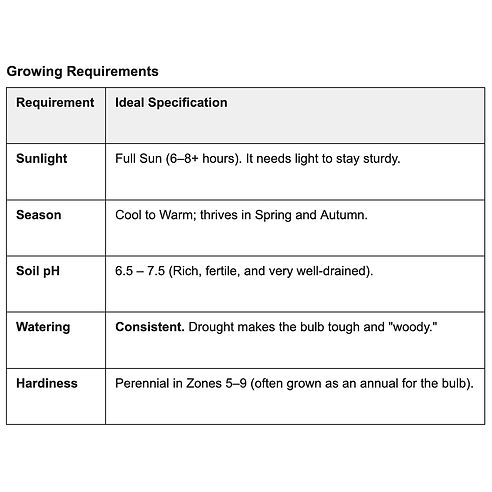
Soil & Fertilizer
Fennel is a "heavy drinker" and a "moderate eater."
The Soil: Use a deep container—at least 10–12 inches deep—to accommodate the taproot. A high-quality potting mix with added compost is ideal.
Feeding: Use a balanced organic fertilizer at planting. If you are growing Bulb Fennel, avoid excessive nitrogen, which produces lots of leaves but a small, spindly bulb.
The "Loner" Rule: Fennel is notoriously "antisocial" in the garden. It produces a natural substance that can stunt the growth of neighbors like Coriander or Tomatoes. It is best kept in its own dedicated pot.
Maintenance, Trimming & Troubleshooting
The "Earthing Up" Trick
If you are growing Bulb Fennel, you want the bulb to be white, tender, and sweet.
The Strategy: When the bulb reaches the size of an egg, pile a little extra soil or mulch around the base to "blanch" it (shield it from the sun). This keeps the flavor mild and prevents it from turning green and bitter.
Troubleshooting
Bolting: If fennel gets too hot or the soil dries out, it will suddenly send up a flower stalk. This ruins the bulb. If you see a stalk starting, harvest the bulb immediately!
Butterflies: Like Parsley, Fennel is a favorite host plant for Anise Swallowtail butterflies. If you see striped caterpillars, consider sharing—they won't hurt the bulb!
Flavor & Culinary Delight
Fennel is the secret ingredient that makes Mediterranean food sing. It has a sweet, crunchy, and refreshing taste.
The Raw Crunch: Thinly shave the bulb and toss with orange slices, olive oil, and mint for a classic Sicilian salad.
The Roast: Quarter the bulb and roast with chicken or fish. The licorice flavor mellows out into a rich, buttery sweetness.
The Fronds: Use the feathery leaves as a garnish for seafood or chop them into a herbed yogurt dip.
Pro-Tip: The "Regrow" Hack
If you harvest your bulb fennel by cutting it off just above the soil line (instead of pulling the roots), the base will often send up "feathery" secondary shoots. These won't form a second bulb, but they will provide you with a constant supply of fresh herb fronds for weeks!