Eggplant
Solanum melongena
Eggplant (Solanum melongena)
Eggplants are heat-seekers. Originating in tropical Asia, they thrive when the sun is high and the nights are warm. They are members of the nightshade family (like tomatoes and peppers) but are often much more statuesque and sturdy, making them perfect candidates for decorative patio containers.
Setting the Stage for Success
Soil & Fertilizer
Eggplants are "hungry" plants. To produce those heavy, fleshy fruits, they need a steady supply of nutrients.
The Soil: Use a premium potting mix that is rich in organic matter. Because they stay in their pots for a long season, a mix with good "structure" (like added perlite) prevents the soil from compacting.
Feeding: Feed with a balanced organic fertilizer every 2-3 weeks. Once you see those gorgeous purple blossoms, switch to a formula slightly higher in Phosphorus and Potassium to ensure the fruit sets and grows heavy.
What to Expect & Time to Harvest
Because you are starting with a potted plant, you can expect to see your first fruits in 4 to 6 weeks.
The "Gloss" Factor: Harvest time is all about the shine! You want to pick the eggplant while the skin is still highly reflective and glossy.
The Test: Press the skin with your thumb. If the flesh bounces back, it’s ready. If the indentation stays, it’s overripe and will likely be bitter and seedy.
Maintenance, Trimming & Troubleshooting
Staking & Airflow
Eggplants can become quite top-heavy once they start producing.
Support: Even "Bush" varieties benefit from a small stake or a tomato cage to keep the heavy fruit from pulling the plant over or touching the soil.
Trimming: Pinch off the "suckers" (the tiny stems growing in the crotch between the main stem and a leaf) on the bottom 6 inches of the plant. This improves airflow and keeps the plant focused on the main crop.
Pest Prevention
Flea Beetles: These are tiny black bugs that jump like fleas and leave "shotholes" (tiny pinpricks) in the leaves. A light dusting of Diatomaceous Earth or a spray of Neem oil usually keeps them at bay.
Pollination: If your plant has flowers but no fruit, give the plant a gentle "vibration" or shake in the morning. This helps move the pollen inside the flower!
Flavor & Culinary Delight
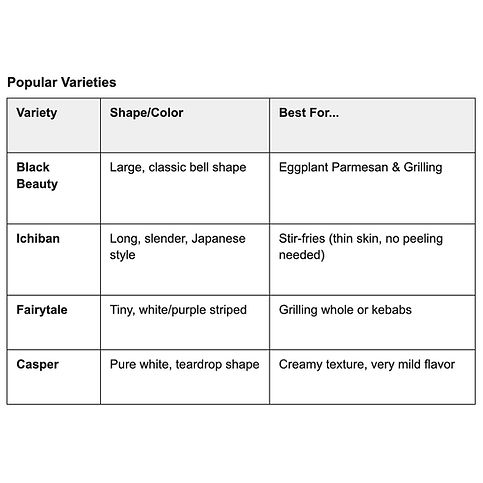
The eggplant is a "culinary sponge"—it has a mild, creamy flavor that beautifully absorbs the spices and oils it is cooked with.
Preparation: Homegrown eggplants have much thinner skins than store-bought ones. Most varieties won't even need peeling!
The "Salt" Trick: If you are frying slices, sprinkle them with a little salt and let them sit for 15 minutes, then pat dry. This draws out excess moisture and ensures they get crispy rather than soggy.
Roasting: Prick a whole eggplant with a fork and roast it until it collapses. Scoop out the "meat" to make a smoky Baba Ganoush.
Pro-Tip: The "Harvest Snip"
Never pull an eggplant off the vine! The stems are incredibly tough and fibrous; if you pull, you risk snapping the entire main branch of the plant. Always use a pair of sharp pruning shears or scissors to snip the stem about an inch above the "cap" (calyx) of the fruit.