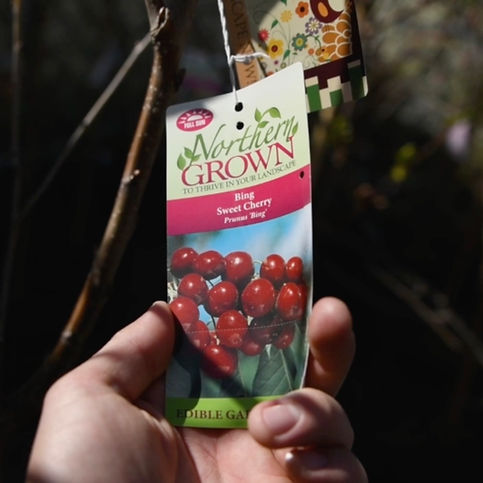
'Bing' Cherry
Prunus avium
The 'Bing' Cherry (Prunus avium)
'Bing' cherries are decadent, firm, and incredibly sweet. As a deciduous tree, it provides "double-duty" beauty in the garden: a breathtaking cloud of white blossoms in the spring, followed by clusters of dark, glistening fruit in early summer.
Setting the Stage for Success
Soil & Fertilizer
Cherries are a bit like Goldilocks—they don't like to be too dry or too wet.
The Soil: They require excellent drainage. A high-quality potting mix amended with a bit of coarse sand or perlite is ideal for your potted 'Bing'.
Feeding: Feed your tree in early spring before the blossoms open with a balanced organic fruit tree fertilizer. Avoid high-nitrogen fertilizers once the fruit has set, as you want the energy to go into the cherries, not just more leaves.
What to Expect & Time to Harvest
Since your tree is already established in a pot, you are looking at a harvest within 1 to 3 seasons (depending on the age of the specimen). 'Bing' cherries typically ripen in late spring to early summer.
The Ripeness Test: The skin should be a deep, dark red (almost black). Give the cherry a gentle tug; if it stays firmly attached, it’s still developing its sugars. If it pops off easily with the stem attached, it’s dessert time!
Maintenance, Trimming & Troubleshooting
Pruning for Sunlight
Cherries fruit on "spurs" that can produce for several years.
The Goal: Keep the canopy open. If the branches get too thick, sunlight can't reach the center, and the inner fruit won't sweeten.
Summer Pruning: Unlike many other fruit trees, cherries are often pruned in late summer. This helps prevent silver leaf disease and controls the vigorous upward growth that cherries are known for.
Pest Prevention & Troubleshooting
Birds: This is your #1 rival. Birds love 'Bing' cherries as much as you do. Since your tree is in a pot, it’s easy to throw a lightweight bird net over the entire canopy once the fruit turns pink.
Fruit Cracking: If a heavy rain hits right before harvest, the cherries can "drink" too much water and burst. If a storm is coming, move your pot under a porch or harvest any nearly-ripe fruit immediately!
Flavor & Culinary Delight
The 'Bing' is the gold standard for "fresh eating." It has a signature "snap" when you bite into it, followed by an explosion of sweet, slightly acidic juice.
Fresh: Best enjoyed chilled, straight from the bowl.
Preserving: Because they are so firm, 'Bing' cherries are the best variety for canning or making "maraschino" style cherries at home.
Baking: Pit them and toss them into a galette or a classic cherry clafoutis. The deep red color bleeds beautifully into the pastry.
Pro-Tip: The "Mulch Gap"
When mulching your potted cherry tree to keep the moisture in, always leave a 2-inch gap between the mulch and the actual wooden trunk of the tree. If the mulch touches the bark, it can hold too much moisture against the wood and cause "collar rot." A little breathing room at the base goes a long way!