'Goodwin Creek' Lavender
Lavandula 'Goodwin Creek Grey'
'Goodwin Creek Grey' Lavender
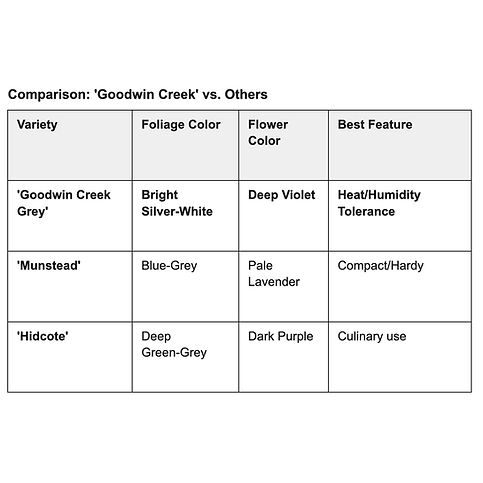
This variety is particularly beloved because it is a "long-bloomer." While many English lavenders have one big show in early summer, 'Goodwin Creek' can produce flowers from spring all the way into late autumn if the weather stays mild. Its scent is a beautiful mix of classic floral lavender with a hint of cool camphor.
Setting the Stage for Success
Soil & Fertilizer
In a pot, the biggest threat to this lavender is "suffocation" of the roots.
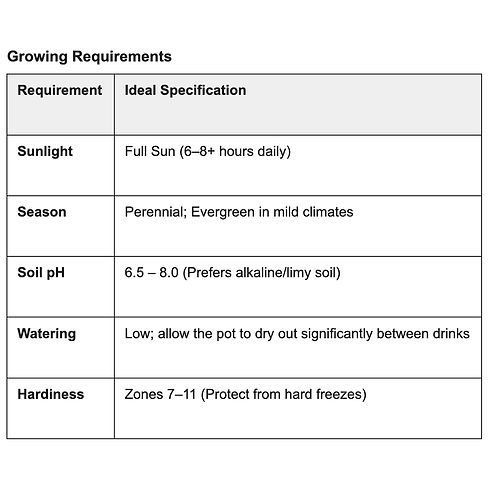
The Soil: Use a very gritty, well-draining potting mix. If using standard potting soil, mix in about 30% perlite or fine gravel. This ensures that water moves through the pot quickly and lets the roots "breathe."
Feeding: This plant thrives in "poor" soil. A single, light application of organic compost in the spring is plenty. Over-fertilizing will lead to weak, floppy stems and fewer flowers.
What to Expect & Time to Harvest
Because you are starting with an established plant, you can expect immediate color.
The Growth: This variety grows into a beautiful "silver ball" shape.
Harvesting: You can harvest the silver leaves year-round for their scent. For the flowers, wait until the bottom two or three tiny blossoms on the spike have opened—this is when the essential oils are most concentrated.
Maintenance, Trimming & Troubleshooting
Pruning for Longevity
Lavenders can become "woody" and split open in the middle if not maintained.
Deadheading: As soon as a flower spike fades, snip it off at the base of the stem. This keeps the plant looking tidy and encourages a second (or third!) flush of blooms.
The "Autumn Haircut": In late autumn, trim the foliage back by about a third to maintain a tight, mounded shape. Never cut back into the bare, brown wood; always ensure there are some green/silver leaves below your cut.
Pest Prevention & Troubleshooting
Root Rot: The number one killer. If the silver leaves turn a dull grey-brown and look "wilted" even when the soil is wet, the roots are likely unhappy. Stop watering immediately and move the pot to the sunniest spot possible.
Pests: Generally pest-free! Deer and rabbits usually skip this one because of the strong aroma, making it a great "barrier" plant.
Aroma & Culinary Delight
While 'Goodwin Creek Grey' is primarily grown as an ornamental and aromatic herb, it has a wonderful presence in the home.
Aromatherapy: The leaves are exceptionally fragrant. Keep the pot near a doorway or seating area where you can brush against it to release the scent.
Drying: The deep violet flowers retain their color much better than other varieties when dried. Hang small bundles upside down in a dark, dry place to make your own "everlasting" bouquets.
Sachets: Crumble the dried leaves and flowers into small cloth bags to keep your linens smelling fresh and to naturally deter moths.
Pro-Tip: The "Terracotta Secret"
If you have the choice, plant 'Goodwin Creek Grey' in a terracotta (clay) pot. Clay is porous and allows moisture to evaporate through the sides of the pot, which provides the perfect "dry-root" environment that this silver-leafed beauty craves. It’s the easiest way to prevent overwatering!