top of page

Blue Mist Flower

Ageratum

Ageratum: The Fuzzy, "Ageless" Floss Flower

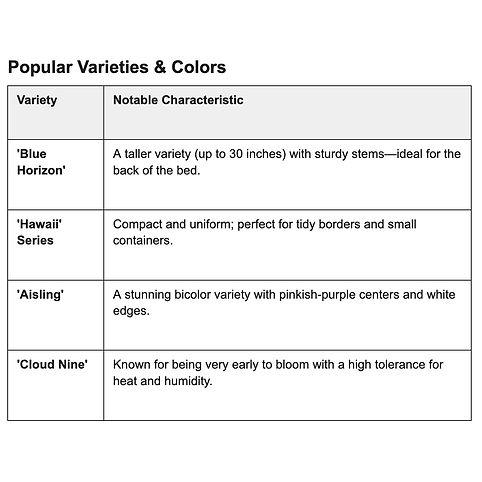
Ageratum, commonly known as the Floss Flower or Bluemink, is a delightful summer annual cherished for its clusters of small, fuzzy, button-like flowers. Its most notable feature is this unique, fluffy texture that creates a soft, misty effect in the garden. While available in shades of pink, lilac, and white, Ageratum is most famous for its stunning and relatively rare shades of powder blue and periwinkle. With varieties ranging from compact, 6-inch bedding plants to taller, 30-inch cultivars perfect for cutting, this plant adds a unique look and feel to borders, containers, and bouquets.  Ageratum is considered very easy to grow. It is a forgiving plant that doesn't demand special treatment, making it an excellent choice for both novice gardeners and seasoned experts looking for reliable, season-long color.


Why Ageratum is a Garden Favorite

The Floss Flower is a popular choice for gardeners for many reasons, combining unique beauty with rugged dependability.

Unique Fuzzy Texture: The soft, puffy blooms provide a textural contrast that is hard to find in any other garden plant.

Sought-After Blue Hues: It offers some of the truest blues available in the annual flower world, making it a perfect companion for common garden colors like yellow, pink, and white.

Long Blooming Season: Ageratum is a workhorse, blooming continuously from early summer right up until the first hard frost.

Deer and Rabbit Resistant: The leaves of the Ageratum are mildly toxic and have a slight odor, making them highly resistant to Browse by deer and rabbits—a huge plus for every garden.

Attracts Butterflies: Butterflies, especially Cabbage Whites and Skippers, are drawn to the nectar-rich flowers.


When to Plant:

Ageratum is a true warm-season annual that should be planted in the garden after all danger of frost has passed and the soil is consistently warm.

You can plant Ageratum anytime all summer long into Fall. It thrives in the summer heat and will establish quickly, providing instant color.  We always have healthy, blooming plants ready to go. Adding Ageratum to your garden now is a perfect way to fill in any gaps or introduce that beautiful blue color that will last for the rest of the summer and well into the cool days of autumn.


Growing Instructions:

Sunlight: For the most compact growth and prolific blooms, plant Ageratum in full sun (at least 6 hours of direct light). It can tolerate light shade, but may become taller and "leggier" with fewer flowers.

Soil: It grows well in average, well-draining garden soil. It is not overly particular about soil quality.

Watering: It performs best with consistent moisture, but established plants can tolerate brief dry spells. Avoid letting the soil get completely parched, especially for plants in containers.

Care and Maintenance: The most important care task for Ageratum is deadheading. As the flower clusters fade, they will turn brown and can look untidy. Regularly snipping off these spent blooms will keep the plant looking fresh and encourage it to produce new waves of flowers.


The "Ageless" Flower from Central America

Ageratum is native to the tropical and subtropical regions of Central America and Mexico, which explains its love for summer warmth. Its botanical name, Ageratum, has a fascinating origin that speaks to one of its best qualities. The name comes from two Greek words: the prefix 'a-' (meaning "not") and 'geras' (meaning "old age").


Combined, the name means "ageless" or "non-aging." This was given to the plant because its charming flowers are exceptionally long-lasting, holding their color for a very long time both in the garden and as a cut flower. This "ageless" quality has made it a symbol of longevity and a treasured garden plant for centuries.


Filler

bottom of page