Bountiful Gardens
Ironweed
Vernonia
The Purple Powerhouse: A Guide to Vernonia (Ironweed)
The Snapshot
Common Name: Ironweed
Scientific Name: Vernonia spp.
Origin: Primarily North American Natives
Hardiness: Zones 4 – 9
The "Vibe": Monumental, vibrant, and structural; the "purple punctuation mark" of the fall landscape.
Why It’s a Garden Essential
The Color: Ironweed produces a shade of purple so deep and saturated it makes other "purple" flowers look pale by comparison.
The Structure: As the name suggests, these stems are tough. Even the species that grow 8 feet tall rarely need staking—they stand like sentinels against the autumn winds.
The Late Show: While many garden favorites are fading in August and September, Vernonia is just hitting its stride.
The Best Species for New Jersey Gardens
1. New York Ironweed (Vernonia noveboracensis)
The "hometown hero." This is the species you’ll see blooming in NJ meadows and along roadsides.
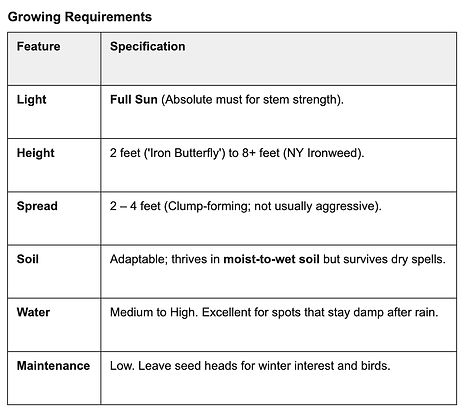
Appearance: Towering stems (5–8 feet) topped with wide, flat clusters of deep violet-purple florets.
Best For: The back of the border or naturalized meadow areas. It loves the moist, slightly acidic soils common in many NJ counties.
2. Narrowleaf / Sand Hill Ironweed (Vernonia lettermannii)
A total departure from its giant cousins and a rising star in NJ residential design.
Appearance: This species only grows about 2–3 feet tall. It has fine, needle-like foliage that looks almost like a Threadleaf Coreopsis or an Amsonia.
Best For: Smaller gardens or "Hellstrips." It is incredibly drought-tolerant and handles sandy soil beautifully (perfect for Jersey Shore or Pine Barrens landscapes). Look for the cultivar 'Iron Butterfly'.
3. Missouri Ironweed (Vernonia missurica)
Appearance: Similar in height to New York Ironweed but with slightly fuzzier (tomentose) leaves and stems, giving it a soft, silvery-green cast.
Best For: Large rain gardens or areas with heavy clay soil.
Ecosystem & Wildlife Impact
Monarch Fuel: Along with Goldenrod and Asters, Ironweed is a primary refueling station for Monarch Butterflies during their southward migration.
Specialist Bees: It is the primary pollen source for the Ironweed Long-horned Bee (Melissodes desponsus).
Winter Forage: Small birds, like Goldfinches, will cling to the sturdy stalks in winter to pick out the seeds.
Designer Tips: Where to Plant
The "Gold & Purple" Show: Pair New York Ironweed with Goldenrod (Solidago). The high-contrast, complementary color scheme is one of the most iconic sights of the American autumn.
The Living Screen: Use the tall varieties to hide a chain-link fence or a neighbor's shed. By August, they provide a dense, flowering wall of purple.
The Texture Play: Plant the fine-textured 'Iron Butterfly' alongside broad-leaved plants like Sedum 'Autumn Joy' for a sophisticated contrast.
Designer Pro-Tip: If the giant height of New York Ironweed is too much for your space, give it the "Chelsea Chop." Cut the stems back by half in early June. This will result in a much shorter (4-5 foot), bushier plant with twice as many flower heads!