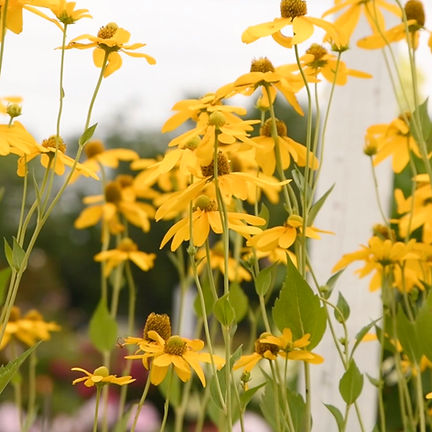
Cutleaf Coneflower
Rudbeckia laciniata
The Emerald-Crowned Giant: Sky-High Blooms with Rudbeckia laciniata
The Snapshot
Common Name: Cutleaf Coneflower, Wild Goldenglow, Green-headed Coneflower
Scientific Name: Rudbeckia laciniata
Origin: North American Native (Widespread across the US and Canada)
Hardiness: Zones 3 – 9
The "Vibe": Wild, lush, and soaring; the ultimate plant for a "secret garden" backdrop.
Why We Love It
Rudbeckia laciniata is a tall-stature superstar that bridges the gap between the sunny prairie and the dappled woodland. Unlike other coneflowers with dark "eyes," this one features a striking green central disc that elongates as it matures. Its foliage is truly unique—the leaves are deeply lobed and "cut," giving the plant a soft, airy texture despite its massive size. It’s the perfect solution for that back-of-the-fence spot where you need a wall of color from July through September.
Ecosystem & Wildlife Impact
Caterpillar Nursery: It is a critical host plant for the Silvery Checkerspot butterfly, providing a home for their larvae.
Pollinator Buffet: The late-summer blooms provide essential nectar for long-tongued bees, wasps, and a variety of butterflies.
Winter Shelter: Because it grows so tall and thick, the stalks provide excellent winter cover for beneficial insects and small birds when left standing.
Perfect Pairings (Companion Plants)
The "Moist-Shade" Dream: Pair with Joe Pye Weed (Eutrochium) and Ironweed (Vernonia) for a massive, butterfly-filled wall of color.
Blue & Gold: The vibrant yellow petals look stunning next to the deep blues of Great Blue Lobelia (Lobelia siphilitica).
Textural Contrast: Plant in front of Elderberry (Sambucus) or behind Ostrich Ferns for a lush, prehistoric feel.
Gardener Stories
"I have a low-lying spot in my backyard that stays soggy for weeks. I couldn't get anything to grow there until I tried the Cutleaf Coneflower. Now, it’s a seven-foot-tall wall of gold every August. It hides my neighbor’s ugly shed perfectly!"
— Brenda S., Zone 4 Gardener
A Growing Story: The Butterfly Boom
One of our customers decided to stop fighting the damp corner of their yard and planted a small patch of Rudbeckia laciniata. By the second year, they noticed dozens of small, spiny caterpillars on the leaves. Panicked, they almost sprayed them—until they realized they were Silvery Checkerspot larvae! They watched the caterpillars transform, and by August, their garden was filled with butterflies. It turned a "problem area" into the most educational part of their yard.