Clematis
Clematis
The Vertical Masterpiece: Elevating the Garden with Clematis
The Snapshot
Common Name: Clematis, Virgin’s Bower, Leather Flower
Scientific Name: Clematis spp.
Origin: Diverse (Species native to North America, Europe, and Asia)
Hardiness: Zones 3 – 9 (Varies significantly by species)
The "Vibe": Romantic, lush, and transformative; the ultimate "sculptural" climber.
Why We Love It
Clematis is the most versatile climber in the gardener's toolkit. It uses twining leaf petioles to scramble up trellises, over fences, or even through established trees and shrubs. They are famous for their massive diversity of flower forms: from the dinner-plate-sized hybrids of early summer to the delicate, nodding bells of the native species. Once they find their "sweet spot," they return year after year, becoming more floriferous with age.
Ecosystem & Wildlife Impact
Pollinator Heights: By growing vertically, Clematis provides nectar at a different "story" of the garden, attracting hummingbirds and long-tongued bees.
Bird Protection: The dense, tangled stems of a mature Clematis provide safe, hidden nesting sites for small songbirds.
Late-Season Resources: Fall-blooming varieties (like C. virginiana) are a critical final nectar source for migrating insects.
Ornamental Seed Heads: Many varieties produce "feathery" or "whiskered" seed heads (styles) that birds use as soft nesting material.
Designer Tips: Where to Plant
The "Living Wallpaper": Use Clematis to soften the look of a plain brick wall or an ugly chain-link fence.
The Layered Arbor: Pair an early-season Clematis with a climbing rose. The Clematis will bloom first, followed by the roses, giving you two distinct "waves" of color on one structure.
Through the Shrubs: Let a Clematis scramble through a spring-blooming shrub (like a Lilac or Forsythia). Once the shrub's flowers fade, the Clematis blooms will take over, making the shrub look like it’s blooming twice!
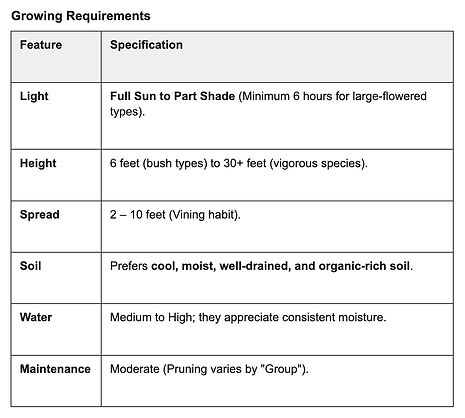
Designer Pro-Tip: Follow the old English rule for Clematis success: "Feet in the shade, head in the sun." The roots must stay cool and moist, while the foliage wants sunlight. Accomplish this by planting low-growing perennials (like Geranium or Heuchera) or placing a decorative flat stone over the root zone to act as a "cool shield."
Stories from the Garden
"I have a tiny patio with no room for a garden. I put a large pot with a trellis and a 'Jackmanii' Clematis in the corner. In three years, it has covered the entire side of my house in deep purple velvet. It's like having a garden that grows up instead of out!"
— Leo D., Urban Gardener
A Growing Story: The Hidden Chandelier
One of our customers planted a native Clematis occidentalis at the base of an old, dying cedar tree. A few years later, she called us to say the tree looked like it had come back to life. Every June, the purple bells of the Clematis hang from the cedar branches like a natural chandelier. It turned an eyesore into the centerpiece of her backyard.