Bountiful Gardens
Parsley
Petroselinum crispum
Parsley (Petroselinum crispum)
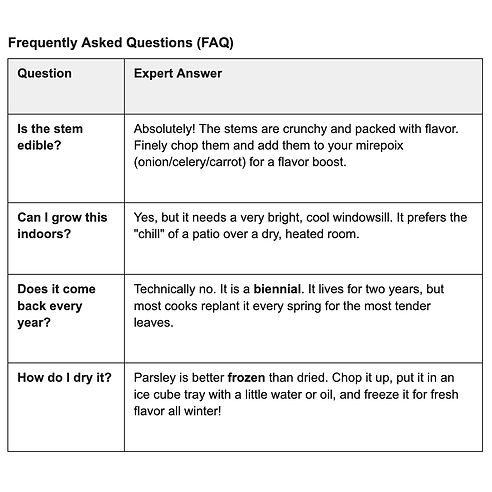
Parsley is a "cut-and-come-again" biennial. In its first year, it produces a lush mound of foliage. In its second year, it sends up a flower stalk, goes to seed, and then retires. On a patio, it acts as a perfect "filler," growing happily at the base of taller plants like 'Big Boy' Tomatoes.
Setting the Stage for Success
Soil & Fertilizer
Parsley is a leafy green, so it has a high demand for Nitrogen to keep those stems tender and the leaves vibrant.
The Soil: Use a rich, organic potting mix. Because parsley has a long taproot, use a pot that is at least 8–10 inches deep.
Feeding: Feed every 3 weeks with a liquid organic fertilizer. If the lower leaves start to turn yellow, the plant is likely asking for a nitrogen boost.
The "Bottom-Up" Harvest
The Strategy: When you need parsley for a recipe, don't just "haircut" the top of the plant. Instead, snip the outermost stems right at the base of the plant. This encourages the center (the crown) to keep producing new, tender shoots.
Maintenance, Trimming & Troubleshooting
The "Black Swallowtail" Guest
The Visitor: You may find beautiful green, black, and yellow striped caterpillars munching on your parsley. These are the larvae of the Black Swallowtail Butterfly.
The Choice: Parsley grows fast enough to share! Many gardeners plant an "extra" pot of parsley just for the butterflies.
Troubleshooting
Bolting: If your parsley suddenly grows a thick, tall stalk in the center, it is "bolting" (going to seed). The leaves will become tough and bitter. This usually happens in the plant's second year or during extreme heat.
White Spots: Small white spots on the leaves can be leaf miners. Simply pinch off the affected leaves and the plant will recover quickly.
Flavor & Culinary Delight
Parsley contains high levels of chlorophyll, making it a natural breath freshener. It has a "brightening" effect on heavy flavors like garlic and lemon.
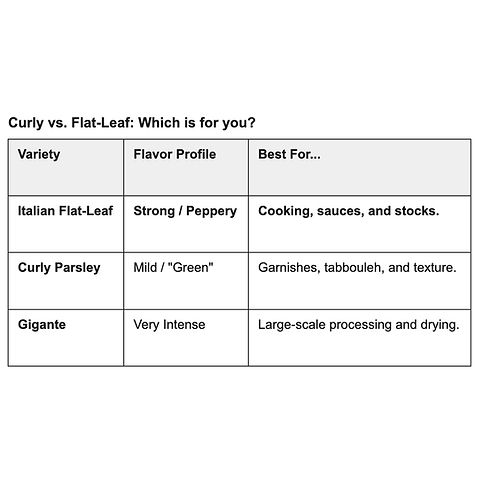
Chimichurri: Finely chop a massive amount of flat-leaf parsley with garlic, oil, and vinegar for the ultimate steak topping.
The "Bouquet Garni": Tie parsley stems together with Culinary Thyme and a bay leaf to flavor soups—the stems actually hold more flavor than the leaves!
Gremolata: Mix minced parsley, lemon zest, and garlic for a fresh topping to finish roasted vegetables or fish.
Pro-Tip: The "Sugar-Water" Trick
If your parsley starts to look a bit limp on a hot afternoon, don't just water the soil. Fill a spray bottle with water and a tiny pinch of sugar and mist the leaves. Parsley can absorb moisture through its foliage, and the sugar gives it a tiny energy boost to perk right back up!