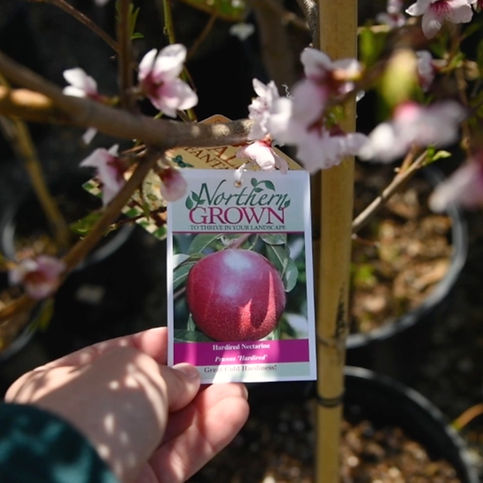
Hardried Nectarine
Prunus persica 'Hardired'
'Hardired' Nectarine (Prunus persica)
The 'Hardired' is famous for its striking appearance: a brilliant, flame-red blush over a golden-yellow background. It is a freestone variety with yellow flesh that is firm, slow to soften, and incredibly sweet. Because it blooms with a mass of showy, pink flowers, it’s just as much an ornamental piece as it is a food producer.
Setting the Stage for Success
Soil & Fertilizer
Nectarines thrive in "rich but light" conditions.
The Soil: Use a high-quality, loamy potting mix. Ensure your container has excellent drainage; nectarines hate sitting in soggy soil, which can lead to root rot.
Feeding: Apply a balanced organic fruit tree fertilizer in early spring as the buds begin to swell. A second feeding with a high-potassium fertilizer (like a tomato or rose food) in early summer will help maximize the sweetness of the fruit.
What to Expect & Time to Harvest
Because you are starting with a potted tree, you can expect your first "taster" harvest within 1 to 2 seasons.
The Ripeness Test: Look for the "ground color." The skin should have no green left on it, showing only vibrant red and gold.
The Feel: Unlike peaches, nectarines are often picked when they are "firm-ripe." They should have a very slight give when cupped in your hand but still feel sturdy.
Maintenance, Trimming & Troubleshooting
The "Open Vase" Pruning
To keep a nectarine healthy and productive in a pot, you must manage its center.
Pruning: In late winter, prune the tree into a "V" or "Vase" shape. Remove the central leader to allow sunlight to reach the middle of the tree. This ensures the fruit in the center ripens at the same time as the fruit on the outside.
Thinning: 'Hardired' is a heavy setter. In June, remove enough small fruits so that those remaining are spaced about 6 inches apart. This prevents branches from snapping and ensures the remaining nectarines are large and juicy.
Pest Prevention & Troubleshooting
Brown Rot: This is a common fungus for nectarines. Prevent it by thinning the fruit so they don't touch each other and by watering the soil, not the foliage.
Peach Leaf Curl: 'Hardired' has good resistance, but if you see puckered, reddish leaves in spring, remove them and ensure the tree has plenty of airflow.
Flavor & Culinary Delight
The 'Hardired' nectarine is prized for its high sugar-to-acid ratio, giving it a classic "tangy-sweet" flavor that is much more intense than many peaches.
Fresh: Since there is no fuzz, you can eat them skin-and-all just like an apple!
Grilling: Nectarines are the best stone fruit for the grill. Their smooth skin caramelizes beautifully. Slice them in half and grill for 2 minutes for a smoky, sweet side dish.
Baking: Because the flesh is firm, they hold their shape perfectly in tarts, cobblers, and galettes.
Pro-Tip: The "Thumb Rule" for Thinning
When thinning your nectarines in June, imagine a tennis ball sitting between each fruit. If two fruits are closer than that, remove the smaller or less perfect one. This "space" allows for better airflow, reduces the spread of rot, and forces the tree to put all its sugar into making the remaining nectarines absolutely massive!